
This Howard Scholar’s Journey to Expanding Opportunity in Latin America and the Caribbean
Marlon Brooks (MPP-EP’28) is the McCourt School of Public Policy’s Howard Scholar, a full-tuition scholarship awarded to a Howard University student or alumnus to attend the McCourt School.
At the heart of Marlon Brooks’ (MPP-EP’28) mission is a question: how can policy and institutions better support economic opportunity in developing countries?
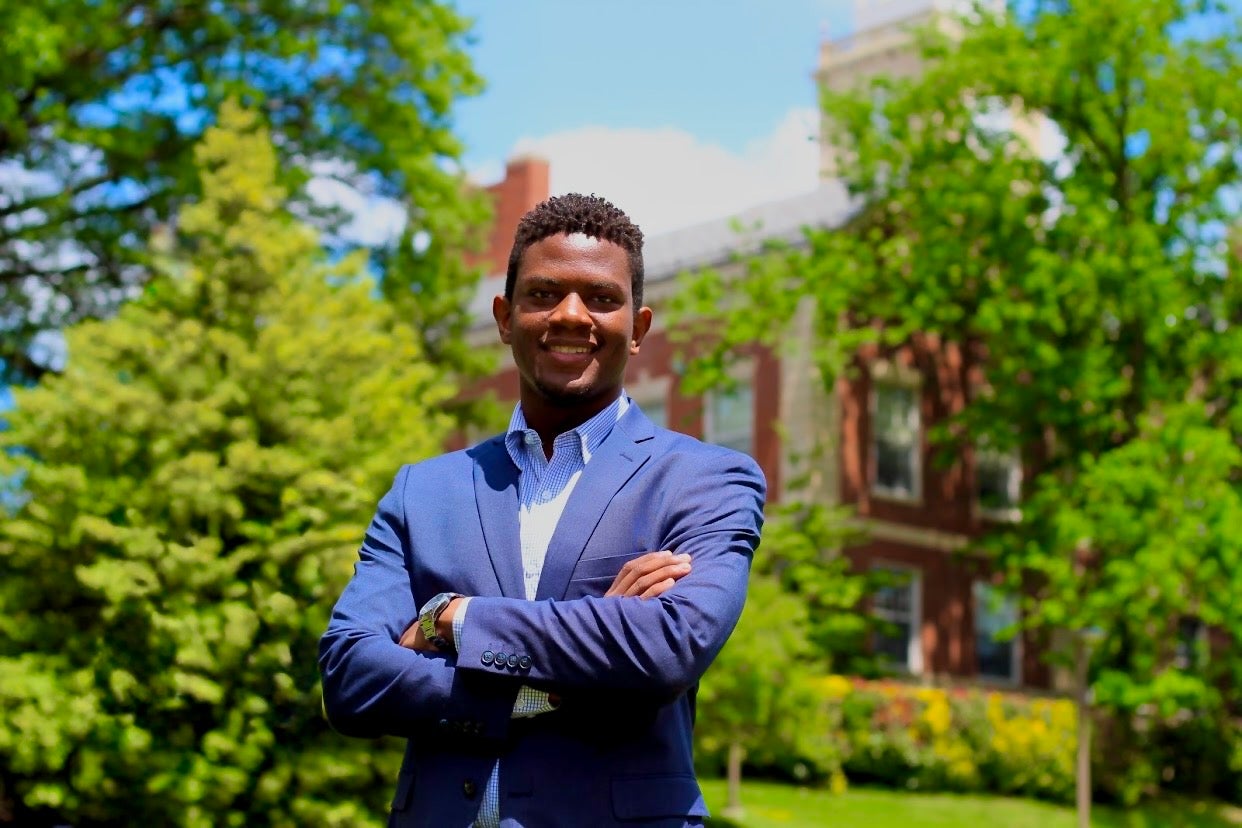
Marlon Brooks (MPP-EP’28), The McCourt School of Public Policy’s Howard Scholar.
“I always knew that I wanted to work in development economics long term,” he says. That goal now shapes his studies as a Howard Scholar and public policy student in the McCourt School of Public Policy’s evening program.
Born and raised in Kingston, Jamaica, Brooks moved to the United States to pursue his bachelor’s degree at Howard University. He double-majored in economics and Spanish, with a minor in political science. His academic path later led him to earn a master’s in applied analytics from Columbia University, where he sharpened the quantitative skills he knew would be essential to conducting advanced economic research and analysis.
While pursuing his master’s at Columbia University, a graduate internship at the Inter-American Development Bank (IDB) offered a glimpse into the kind of impact he hoped to make. After graduating from Columbia University, Brooks started an economic consulting role where he conducted rigorous economic analyses on various antitrust matters in the United States and Australia. He found himself thinking more about why some countries have strong policy and regulatory frameworks, and what happens to development outcomes when others don’t.
Brooks’ question lingered, eventually inspiring a pivot back to the IDB as an economic consultant and research fellow in the Office of Evaluation and Oversight, where he now helps assess the relevance and effectiveness of development efforts across Latin America and the Caribbean.
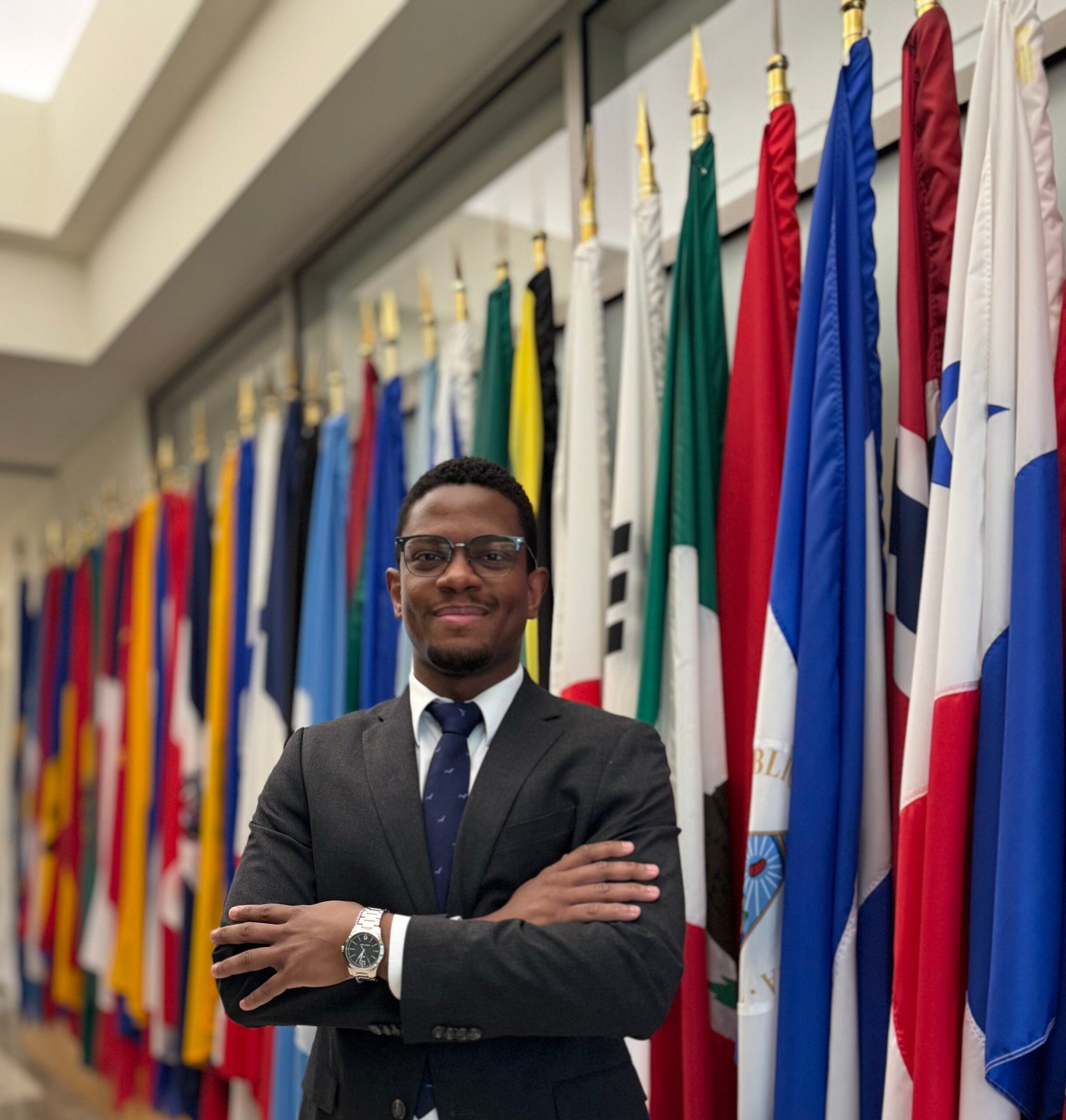
Marlon Brooks (MPP-EP’28) at the Inter-Development Bank office, Washington, DC.
“It’s the perfect role for where I am now,” Brooks says, describing how the position draws on his background in economics and finance while expanding his skills in monitoring and evaluation, multilateral development bank operations and the developmental challenges in his regional areas of interest. The role also allows him to see the impact of projects on the ground and communicate in Spanish, a skill he improved during his time at Howard University.
Improving outcomes through public policy
Immersed in his new role, Brooks didn’t want to lose any momentum in his career by going back to school full-time, but knew a master’s in public policy was the missing piece in his understanding of development economics.
“The MPP-EP seemed like the perfect fit to complement and supplement my current work experience,” he says.
The program aligns with his day-to-day work researching and evaluating how institutions function by helping him better understand the fundamental principles and practices on which they are designed in the first place.
In the future, Brooks hopes to return to his hometown, where he aims to support “policy and institutional reforms that promote economic development and global competitiveness in Jamaica,” potentially through public service or advisory roles.
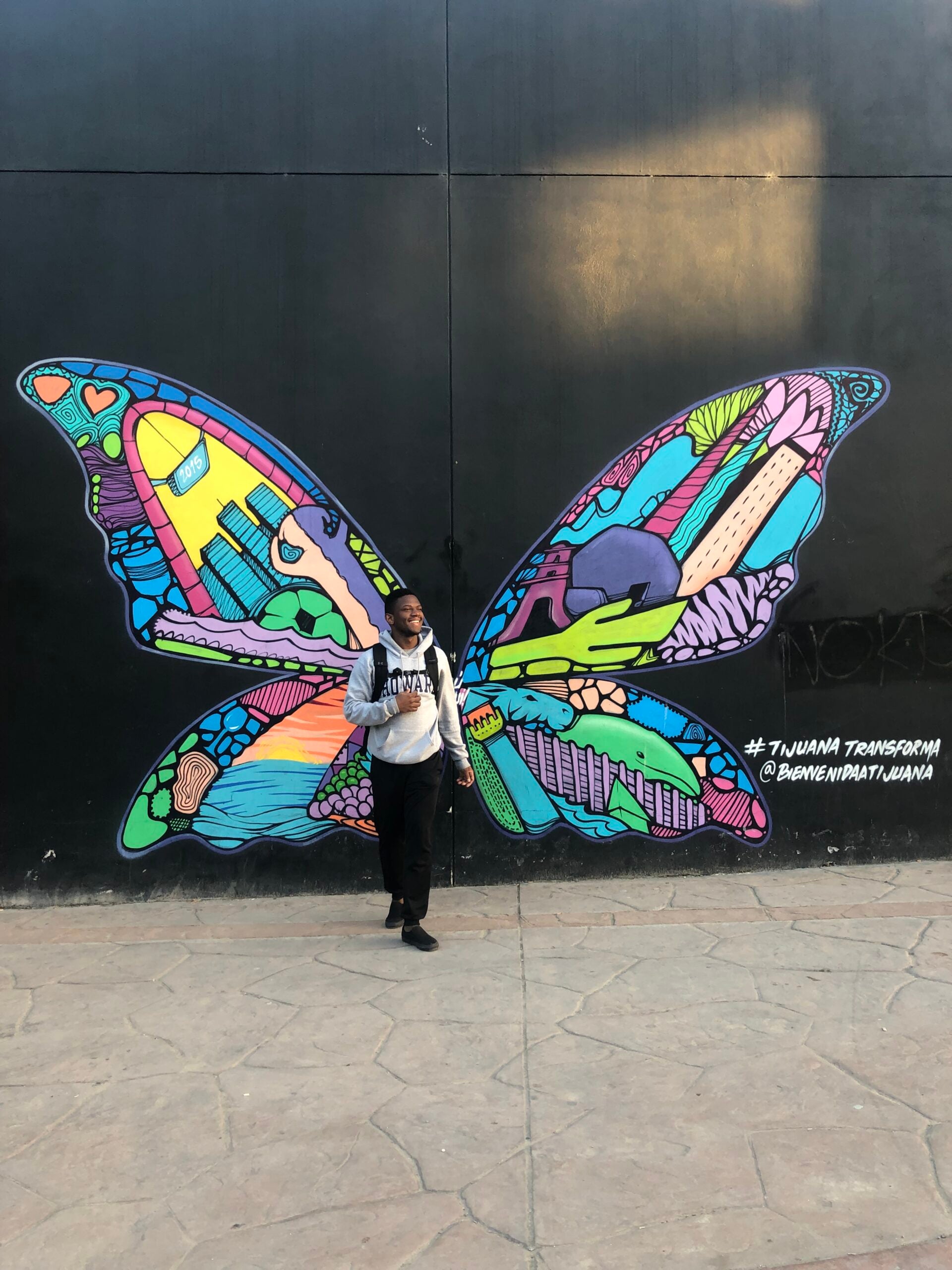
Marlon Brooks (MPP-EP’28) on an alternative spring break trip to Tijuana, Mexico, during his time at Howard University. Brooks volunteered as a Spanish language translator for migrants and refugees to access basic health services and legal counsel from Howard Law students for a week.
Brooks’ advice to students at historically Black colleges and universities (HBCUs) interested in a similar path is grounded in his own experience as an HBCU graduate. He notes that development work is often “very high context,” and “talking to as many people as possible” can help uncover the “depth, linkages and frameworks that are often embedded.”
He also encourages students to “upskill as much as possible,” whether through languages, technical training, or certifications, to stay competitive in a field that demands both breadth and depth.
Across every step of the Howard Scholar’s journey, a throughline guides his mission: a commitment to strengthening the policies and institutions that shape economic opportunity.