The McCourt School’s Tech & Public Policy Center (TPP) has named its new cohort of TPP Scholars: three incoming students and two returning, each paired with Georgetown faculty to research pressing tech policy issues.
The McCourt School of Public Policy’s Tech & Public Policy Center (TPP) has selected Emili Robles (MS-DSPP’28), Gregory Shelby (MPP’27) and Amr Yakout (MPP’27) as TPP Scholars for the 2026-2027 and 2027-2028 academic years. They are joined by returning TPP Scholars Hannah Blair (MPP’27) and Max Morgan (MPP’27).
The TPP Scholars Program, funded through Center’s founding donor Frank McCourt, awards a partial-tuition scholarship of up to $35,000 for the upcoming academic year, a paid research assistantship and access to exclusive events and mentorship opportunities.
Scholars will work with Georgetown and McCourt School faculty to advance scholarship within TPP’s focus areas: digital governance and agentic AI; social media, online platforms and chatbots; and technology and AI regulation. Each scholar will work on faculty research funded through TPP’s Grants Program.

Meet the New TPP Scholars
Emili Robles (MS-DSPP’28)

Originally from Chicago, Emili Robles (MS-DSPP’28) earned her B.S. in computer science and data science from the University of Wisconsin–Madison, with minors in digital studies and leadership. After graduating, Robles joined Starbucks as a software engineer supporting infrastructure for store operations and order fulfillment. Through this role, she gained a deeper understanding of frontline workers’ experiences by volunteering in stores as a Holiday Helper, listening to partners and advocating for systems that better reflect their needs.
As a TPP Scholar, Robles is interested in exploring the intersection of engineering, governance and social impact. As part of her research assistantship, she will be working with McCourt’s Better Government Lab on two projects related to the “One Big Beautiful Bill Act”, a federal reconciliation law that made major changes to SNAP and other federal programs. The first project models how the law’s SNAP payment error rates vary across states. The second scopes a study examining how the federal legislation has changed corporate earnings calls to better understand the political economy of the law’s impact on companies operating in the public benefit space.
Gregory Shelby (MPP’27)

Gregory Shelby is the operations and communications lead at Intelligence Security Laboratories, where he helps develop high-security AI infrastructure. He holds a B.A. in political science and government from the University of California, Santa Barbara. Before moving into technology policy, Gregory spent more than a decade in film and television as an actor and producer, including work on the Emmy-winning Public Broadcasting Service documentary Cyberwork and the American Dream.
As a Tech & Public Policy Scholar, Shelby will work with Peter F. Krogh Professor Erik Voeten in the School of Foreign Service on research to broaden the lens on AI regulation to examine how AI regulations in the United States shape the adoption of AI abroad. He looks forward to deepening his work at the juncture of emerging technology and public policy, and learning more about AI governance and safety.
Amr Yakout (MPP’27)

Amr Yakout (MPP’27) was born and raised in Egypt before moving to Abu Dhabi and then New York City to pursue his B.S. in math and economics at New York University (NYU) Abu Dhabi. He worked at Amazon in Dubai as a program manager for nearly two years before moving to Washington, DC, to join McCourt and work on pressing policy issues around emerging technologies with a focus on AI. As a Scholar, he will be working as an AI Governance research assistant at the Georgetown Center for Security and Emerging Technology (CSET), where he focuses on export controls and the emerging question of model controls, managing risk and competing with China. CSET’s research aligns with the Center’s focus on technology and AI regulation.
Yakout is interested in the geopolitics of AI and compute, the economics and market structure of the technology and the legal tools available to policymakers. He is drawn to these questions because they push him to see the nuance in different governance proposals, weighing both the risks and the potential of AI.
Returning Scholars
Hannah Blair (MPP’27)

Hannah Blair (MPP’27) is a policy and communications professional with nearly a decade of experience advancing climate and global health strategies worldwide. Blair has worked with non-governmental organizations and USAID, driving over 50 policies, including air pollution standards in Europe and more stringent appliance efficiency policies in emerging markets. She currently leads communications for the Planetary Health Alliance at Johns Hopkins Bloomberg School of Public Health, working across 600+ partner organizations and 80+ countries to advance policy, research and campaigns on critical environmental health challenges.
Through TPP, Blair is working with McCourt Associate Professor Jonathan Ladd on an extensive national survey measuring the public’s hopes and fears about the technology industry and AI, and will convene a conference examining the public’s evolving relationship with big tech. The TPP-funded research aligns with the Center’s priority area of technology and AI regulation. Their work will help policymakers appreciate what citizens want, a goal she sees as a vital first step in developing effective tech policy.
Max Morgan (MPP’27)
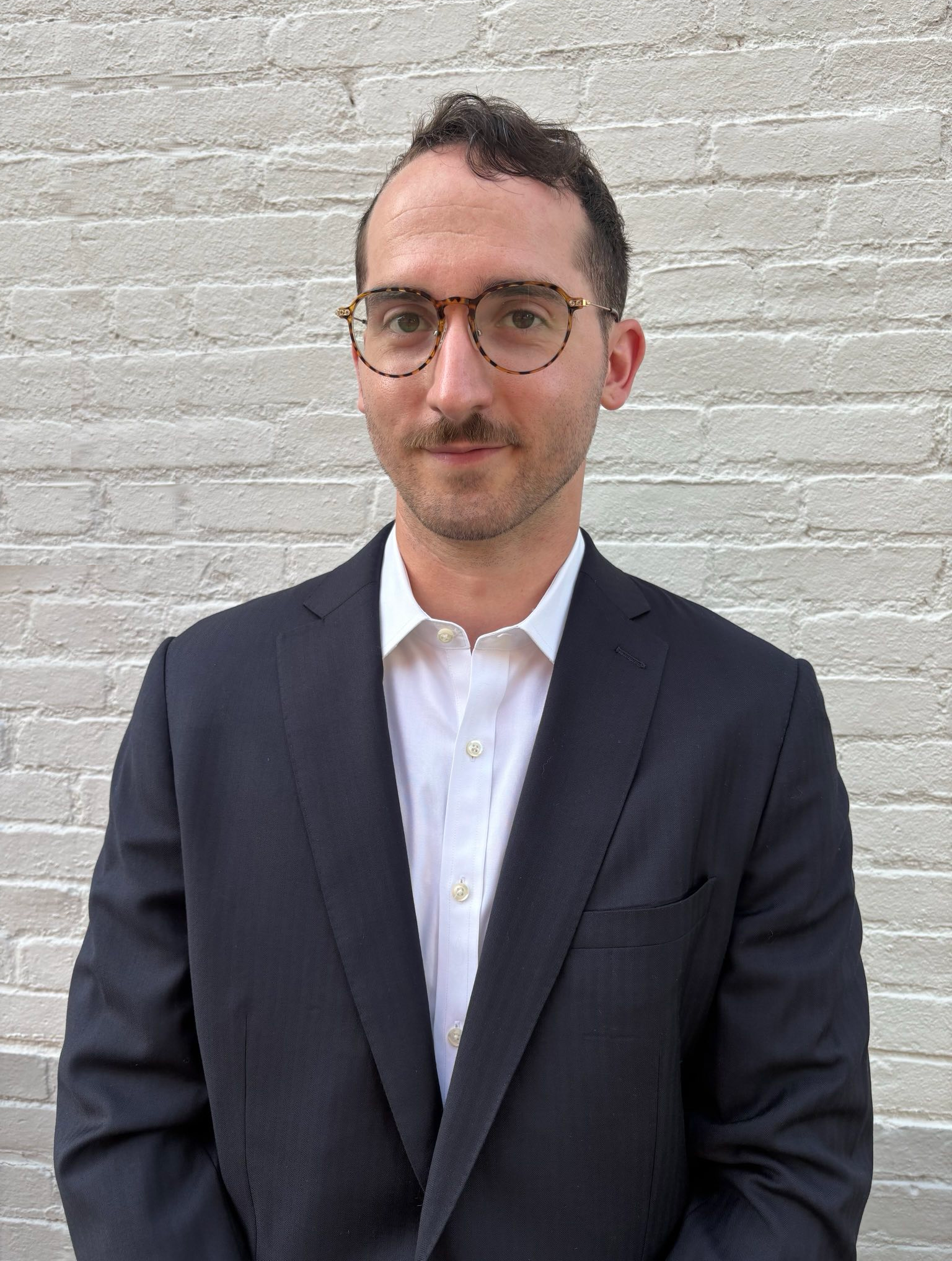
Max Morgan (MPP’27) spent his career as a software engineer building technology that serves people’s interests. After graduating from the University of Michigan with a B.S. in engineering, he worked at Meta Platforms supporting the company’s efforts to minimize data use and increase transparency for people using Facebook and Instagram. Later, Morgan transitioned to the public sector, leading digital service delivery and supporting AI policy development at the City of Detroit, Michigan. Max is currently a graduate intern in the Office of the Chief AI Officer at the Federal Reserve Board of Governors, where he supports AI policy development and implements AI systems that support the Board’s mission.
As a TPP Scholar, Morgan has supported Associate Research Professor Renée DiResta’s project MySky, which introduces the first transparent and customizable algorithmic social media feed open to researchers on BlueSky. The TPP-funded project aligns with the Center’s focus on social media platforms and chatbots. This fall, he will also be working with Princeton’s Center for Information Technology Policy (CITP) on Collaborative Research for Updating AI eXpectations (CRUX), developing long-running AI agents to evaluate frontier capabilities in messy real-world scenarios.