Four tech policy leaders spanning UK government, Congress and non-profit organizations join the McCourt School’s Tech & Public Policy Center this fall.
The McCourt School’s Tech & Public Policy (TPP) Center is pleased to welcome Simon Case, distinguished visiting fellow and member of the United Kingdom’s House of Lords, to its fall 2026 visiting fellows cohort. He is joined by visiting fellows Travis Moore, founder and executive director of TechCongress; Mitchell Kominsky, vice president of government affairs at Americans for Responsible Innovation (ARI); and Kira Tebbe, senior manager at the Aspen Institute’s Financial Security Program.
Together, this cohort’s work spans TPP’s core focus areas: digital governance and agentic AI, social media and platform accountability, and technology and AI regulation. Through the fellowship, they’ll bring that expertise directly to McCourt students and the broader Georgetown community. Each fellow will center their engagements based on themes such as
AI adoption in the public sector, staffing tech policy, social media regulation and building digital infrastructure.
Fellows will host timely events, lead site visits to public and private organizations and give students unique opportunities to engage with senior tech policy professionals. They will also connect with McCourt and Georgetown students through small discussion groups designed to spark dialogue.
Meet the Fall 2026 Visiting Fellows

Simon Case, Distinguished Visiting Fellow
TPP Priority Area: Tech and AI Regulation
Theme: AI Adoption in the Public Sector
Simon Case joined the House of Lords, the UK’s upper Parliamentary chamber, in July 2025 as a Crossbench peer. Case also holds a number of advisory positions in AI and private equity companies. His work in AI focuses on the application of these technologies in public and private enterprises. Simon is also the independent chair of Team Barrow, a partnership between central government, local government and the private sector which is delivering a 10-year-long regeneration programme for the town of Barrow-in-Furness in the UK’s Cumbria, the home of the country’s nuclear submarine construction industry. Simon is a non-executive director of the UK Ministry of Defence. He is also a visiting professor at King’s College, London, and an ambassador for both the Royal Air Force Charitable Trust and the Patchwork Foundation.
Earlier in his career, Case served in the UK’s public service for two decades. He was cabinet secretary and head of the civil service for nearly five years, serving four prime ministers through the COVID-19 pandemic, the Ukraine war and reign change. As head of the civil service, he led the UK’s half a million civil servants. Before this, Case held several roles, including permanent secretary in the Prime Minister’s Office, private secretary to HRH The Duke of Cambridge, principal private secretary to the Prime Minister, was on the Brexit negotiation team, was a director at Government Communications Headquarters (GCHQ) and held a number of other roles in the UK’s national security community.
Case holds degrees from Cambridge University and the University of London.
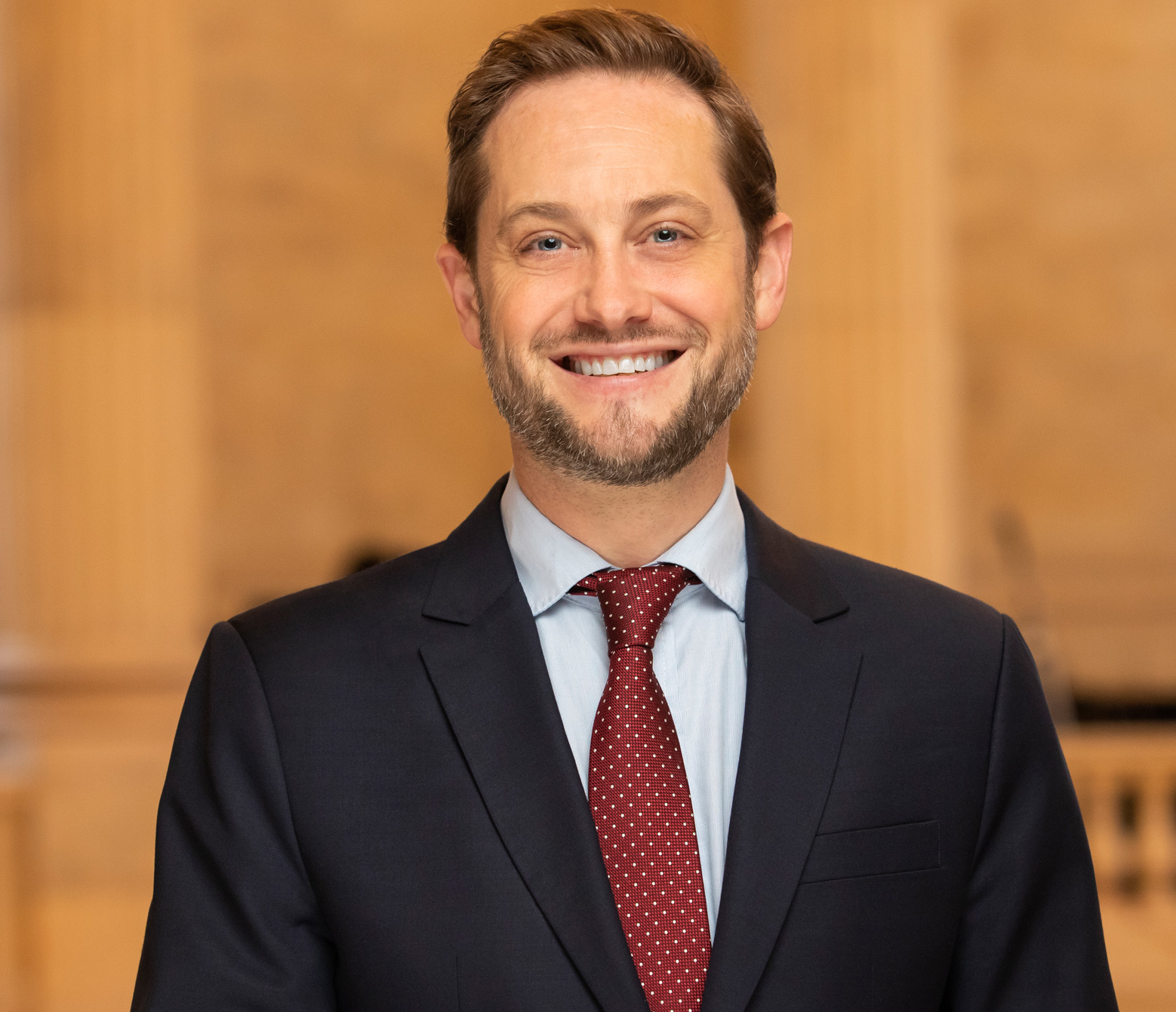
Travis Moore, Visiting Fellow
TPP Priority Area: Tech and AI Regulation
Theme: Who Staffs Tech Policy?
Travis Moore is the founder and executive director of TechCongress, which places computer scientists, engineers and other technologists to serve with members of Congress on tech policy matters in order to galvanize Congress to invest in tech talent. Since 2015, TechCongress has sent 146 technologists into Congress. In 2020, in the face of COVID-19, TechCongress launched a one-time Congressional Digital Service Fellowship to meet the urgent digital capacity needs revealed by the pandemic. Congress created the House Digital Service as a result, which is the first digital service office in a legislature in the United States. Moore worked on Capitol Hill for six years and was the legislative director for former Rep. Henry A. Waxman (D-CA), the then chairman of the Energy and Commerce Committee. He is also the co-founder of the Congressional Staff Alumni Council and #CongressToo, a group of 1500 former Congressional staffers that brought the #MeToo movement to Capitol Hill and spearheaded a reform overhaul signed into law in late 2018.
Moore holds degrees from Miami University and the University of Bath.

Mitchell Kominsky, Visiting Fellow
TPP Priority Area: Social Media/Tech and AI Regulation/ Digital Gov
Theme: Beyond the Horizon: A Unified Approach to AI Regulation for the Agentic Era
Mitchell Kominsky is vice president of government affairs at ARI, the largest bipartisan AI policy organization in Washington. His work spans the full AI stack: agentic systems, chatbots, export controls, critical infrastructure, energy and frontier model governance. Kominsky brings a unique, unified view to questions of how the U.S. should regulate emerging technology. Previously, he was an appointee at the U.S. Department of Transportation, leading technology policy at the National Highway Safety Administration. He has served as counsel to the U.S. Senate Republican Policy Committee and the House Oversight Committee, where he led groundbreaking work on emerging technology governance, and is the founder of Futureland Ventures, a deep tech investment firm.
Kominsky holds degrees from Emory University, the University of Miami School of Law and Stanford University.

Kira Tebbe, Visiting Fellow
TPP Priority Area: Digital Governance & Agentic AI
Theme: How federal and state governments design, build, and operate the digital infrastructure that shapes the public’s experience accessing services
Kira Tebbe is a senior manager at the Aspen Institute Financial Security Program, where she works to ensure that public benefits systems are resilient and accessible to those who need them. Working across government, the private sector and civic tech organizations, Tebbe advances technology innovation and strengthens how benefits programs are designed and delivered in state human services programs. Previously, she co-founded the Digital Service team at the Administration for Children and Families within the U.S. Department of Health and Human Services, where she applied technology, design and AI to improve operations and customer experience across numerous nationwide programs. Prior to that, she was a data scientist at IBM Watson Health and EF Education First. Her work has been featured in The New York Times, The Washington Post and Digital.gov.
Tebbe holds degrees from Yale University and the University of Chicago.
How Students Can Get Involved
McCourt School and Georgetown University students are encouraged to apply to the visiting fellows’ Student Leadership Teams (SLT). SLTs are groups of students who work directly with visiting fellows to organize engaging discussion groups and events. Receive more information and apply now.
The views and positions expressed are solely those of the fellows and do not necessarily represent the views or positions of any organization with which the fellows are affiliated.