By Nora Guo Zhan
Local government produces an overwhelming stream of information: hearing notices, proposed rules, oversight documents, public meetings, agency testimony, budget updates, and news coverage about decisions that affect everyday life. For a busy resident, student, researcher, journalist, advocate, or public servant, following the full picture can require more time than the workday allows.
The DC Council Weekly Digest is a civic technology project built at McCourt’s Tech and Public Policy Center to make that information easier to find, scan, and use. The project empowers users to create a highly customized feed of information about recent the DC Council, including official public sources, local news, oversight materials, and video feeds. These updates are converted into concise weekly email briefs, with links to the original materials for anyone who wants to go deeper.
The project is developed as a practical experiment in using technology to improve access to local policy information. Its purpose is not to replace official records, public meetings, journalism, or advocacy work. Instead, it helps more people notice what is happening, identify items connected to their interests, and follow up with the authoritative source when an update deserves closer attention.
Why This Project Matters
Public participation depends on timely information. When hearings, rulemakings, or oversight materials are hard to track, people with fewer resources or less institutional knowledge can be left out of the conversation. A researcher may miss a newly released oversight document. A community organization may hear about a public meeting only after it happens. A student may want to follow housing or education policy but not know where to begin. A resident may care about a narrow issue, such as transportation safety or health services, but not have time to read every update from the Council.
The digest is designed around that problem. It lowers the monitoring burden by collecting updates from several places, filtering them for DC Council relevance, and presenting the week’s activity in a format that is short enough to read but detailed enough to be useful. Each email gives readers a starting point: what happened, why it may matter, and where to click for the original source.
How the Digest Works
Behind the scenes, the project uses a lightweight pipeline. Collection scripts gather items from sources such as official DC Council hearing feeds, DC Register rulemaking notices, Council oversight pages, the DC Council YouTube channel, Google Alerts, and selected local news outlets. The system stores those items in a database, removes duplicates where possible, and prepares a weekly set of updates for summarization.
The weekly email is then generated for each subscriber. Instead of sending exactly the same message to everyone, the digest uses a subscriber’s selected topics and written interests to look for matching updates from the past week. If the system finds relevant items, those items are prioritized in the subscriber’s summary. If there are no matching items during that week, the digest falls back to a general DC Council update and explains that no interest-specific updates were found.
Each summary is intentionally concise. The email is meant to be a briefing, not a full report. It gives readers a few clear bullets, source links, and enough context to decide whether they want to read the underlying document, watch a hearing, or share the information with others. This approach keeps the digest useful for both casual readers and people who regularly work with public policy information.
Personalized Subscriptions
The subscription page invites readers to enter their email address, choose policy topics, and describe their interests in their own words. That free-text field is important because people often follow issues in ways that do not fit neatly into a fixed checklist. Someone might be interested in school attendance, tenant protections, traffic enforcement, small business licensing, behavioral health, food access, environmental justice, or a specific neighborhood concern. The system can use those terms to help prioritize the most relevant weekly items.
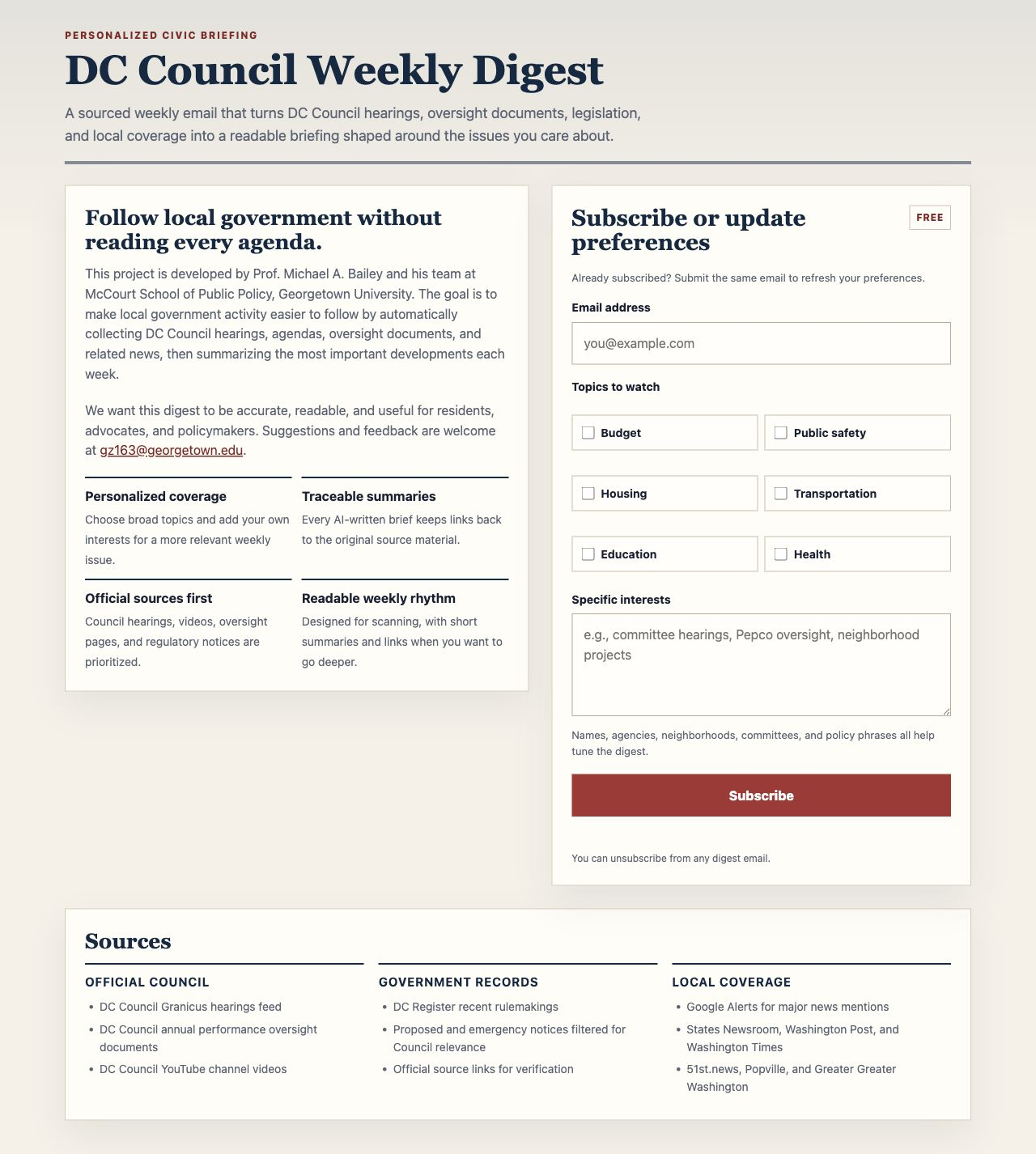
Figure 1. Subscription page for the DC Council Weekly Digest.
What Subscribers Receive
A weekly email gives subscribers a short, source-linked briefing for the week. The content is personalized around the reader’s selected topics and written interests, but the digest is designed to remain useful even when a quiet week produces fewer updates in a specific field. In practice, the email follows two patterns: a fully interest-specific edition when there are enough matching stories, and a mixed edition when the week has only one or two relevant updates for that subscriber.
The two sample emails from the June 22-29, 2026 coverage window show this behavior clearly. A health-oriented subscriber received a digest led by HIV prevention and behavioral health updates. A subscriber interested in environmental topics and sustainability received a lead story connected to the built environment and pedestrian safety, followed by other important Council news from the week. That fallback is intentional: subscribers should always receive something worth reading, because staying aware of major Council activity can be useful even when the week’s agenda does not perfectly match one narrow interest area.
Two Personalization Patterns
Pattern one appears when there are enough updates for a subscriber’s selected interests. In the health example, the digest can stay tightly focused: the lead story and following story both connect directly to public health, HIV prevention, behavioral health, and health program funding.
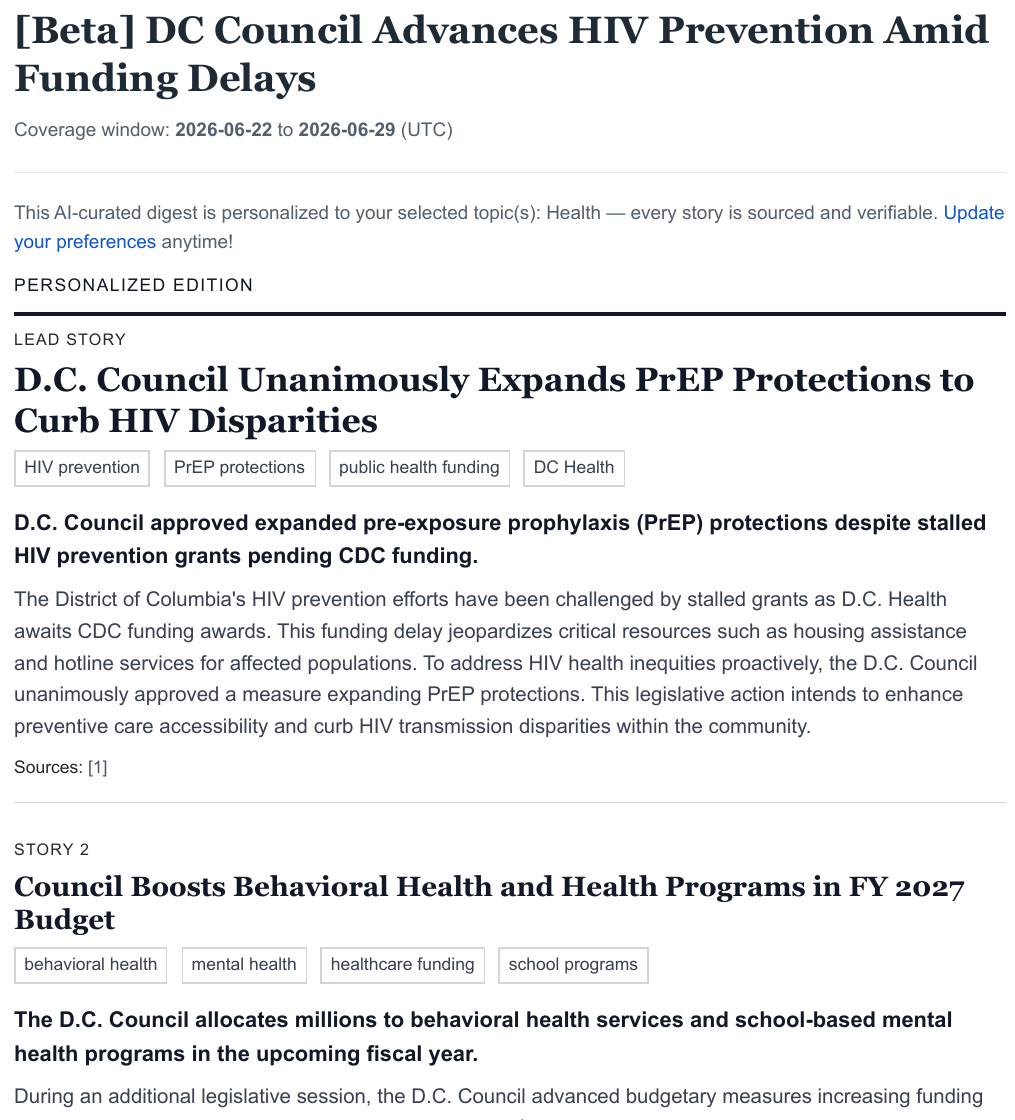
Figure 2. Health-oriented sample email with multiple interest-matching Council updates.
Pattern two appears when the system finds a relevant lead story but not enough interest-matching stories to fill the entire weekly email. In that case, the digest keeps the personalized lead and adds a small set of other important Council updates. This keeps the email useful without pretending that unrelated stories are interest matches.
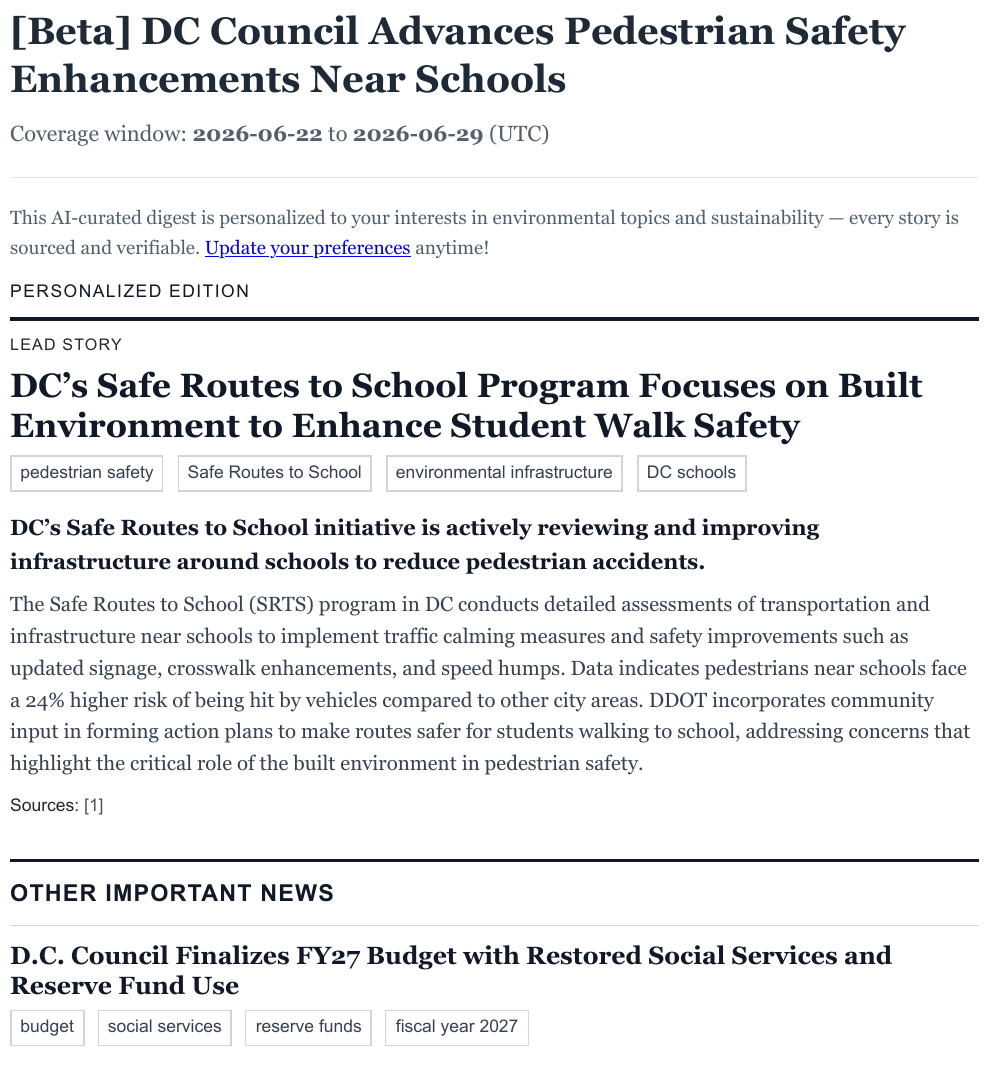
Figure 3. Environment and sustainability sample email with a personalized lead story followed by other important news.
This design reflects the larger purpose of the project. Whatever field a reader works in, the digest should help them find the most relevant information first while still keeping them connected to the broader work of the DC Council.
Who Might Use It
The DC Council Weekly Digest may be useful for a wide range of readers. Residents can use it to follow issues that affect their neighborhoods. Students can use it to learn how local policy develops over time. Researchers can use it as a monitoring tool for finding new public materials. Journalists and advocates can use it to notice hearings, documents, and rulemakings that deserve deeper attention. Public servants and civic organizations can use it to keep track of developments across areas that intersect with their work.
Because the digest is organized around weekly activity and subscriber interests, it is especially helpful for people who want a manageable overview rather than a constant stream of alerts. The project recognizes that civic information is most valuable when people can actually absorb it, act on it, and return to the source material when needed.
Looking Ahead
This project is still an evolving tool. Future improvements could include additional data sources, more refined topic matching, stronger evaluation of summary quality, better previews for subscribers, and more ways to make the digest useful for community groups or classrooms. As the project develops, feedback from users will be essential. The best version of the digest will be shaped not only by technical performance, but also by whether it helps real people follow the policy issues they care about.
At its core, the DC Council Weekly Digest is about reducing friction between public information and public understanding. Local democracy depends on people being able to see what their government is doing, recognize when an issue matters to them, and participate before decisions are already settled. A short weekly email cannot solve every access problem, but it can make the first step easier.
Contact
If you are interested in learning more, subscribing, providing feedback, or collaborating on the project, please contact us at gz163@georgetown.edu.