
This story was written by Judi Ketteler as part of the McCourt School’s annual alumni magazine, Policy Perspectives.
As an english and sociology major in undergrad, Jennie Sparandara (MPP’07) wasn’t very familiar with policy degrees. It wasn’t until she started working in the nonprofit sector that she began to appreciate the role of policy in shaping social impact. Eager to learn more, she determined McCourt was the top of the list for Master of Public Policy (MPP) programs. “I knew I would leave the program with hard skills that would be applicable to a variety of different career paths.”
City government was not initially on Sparandara’s radar, but one of her McCourt professors suggested working for Michael Nutter’s mayoral campaign in Philadelphia. After Nutter’s victory, she joined his first-term administration.
“I was part of the government as we were setting things up, which provided a formative and fascinating experience,” she said. Her work in economic mobility, anti-poverty and job training carried over when she left the mayor’s office for her next job, a 10-year stint in a corporate responsibility role for JPMorgan Chase. This summer, she became Google’s head of grantmaking for the Americas. “One step has led to the next, but McCourt was the catalyst for it all,” she said.
Sparandara’s experience isn’t unusual for McCourt graduates.
Nour Bouzouita (MPP’24) was living in Tunisia with plans to be an investment banker in Paris. The 2020 pandemic derailed her plans, which led to a series of conversations with her mentor. “He asked me some questions about what I wanted to accomplish. He said everything I was describing sounded like working in public policy,” she said.
Once the world opened up again, Bouzouita chose to study at McCourt because Washington, DC, seemed like an ideal environment. As graduation approached, her faculty advisor, Andreas Kern, suggested the International Monetary Fund (IMF). “I’d always been under the impression you needed a Ph.D. to work at the IMF, but Professor Kern said that wasn’t true,” she said. He introduced her to two alumni at the organization; today, she is a research analyst in the African department.

“I wouldn’t be here at all without McCourt,” Bouzouita said.
Moritz Ludwig (MPP’25), protocol officer and social secretary to the ambassador at the German Embassy, has a similar story. “I would not have braved the 2025 job market without my McCourt network and experiences. From our first semester on, the school emphasized career development and hard skills,” he said. “Coupled with connections I made through my internship experience at the Atlantic Council and through my engagement as president of the European Policy Organization [a McCourt student organization], I was able to rely on a network that supported me in finding and securing my job here.”
I would not have braved the 2025 job market without my McCourt network and experiences.
Moritz Ludwig (MPP’25)
A policy degree from McCourt can jump-start a career in many ways. For Malcolm Williams (MPP’97), director of the behavior and policy sciences department at RAND, his time at McCourt helped him discover his love of research. “I learned a great deal about policy analysis and put those skills to work after I graduated. Eventually I realized that I wanted to be a part of the world that was helping to create the evidence that policy decision-makers use,” Williams said.
He became interested in health policy, ultimately earning a Ph.D. from the Harvard Health Policy program.
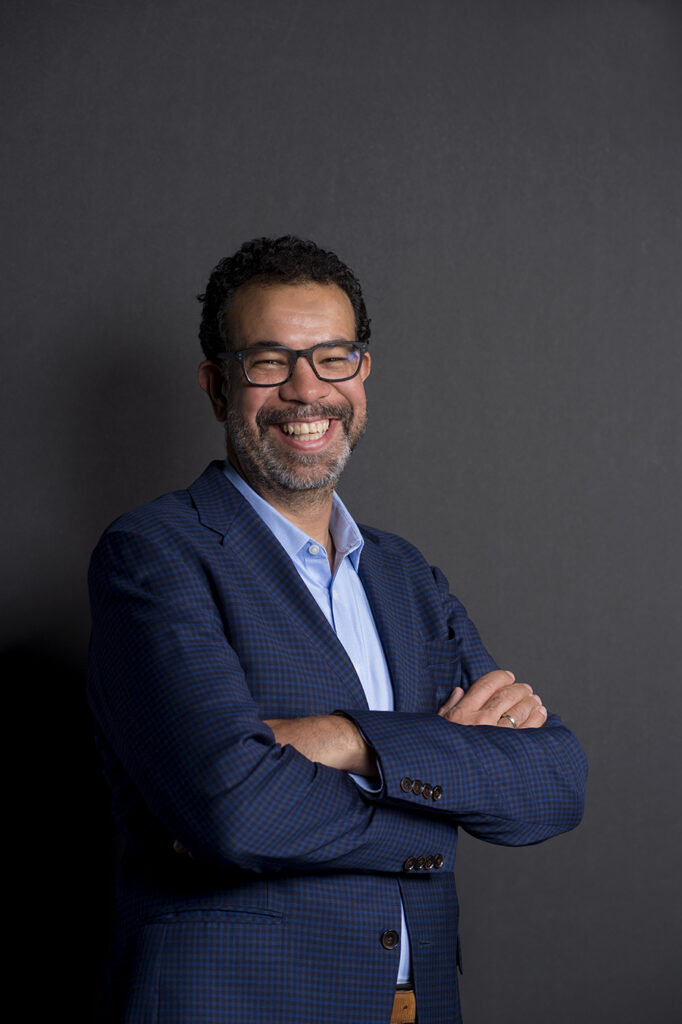
Now in a leadership role after 19 years at RAND, Williams said working with researchers across disciplines has reiterated for him the value of a policy degree. “There are so many places McCourt graduates can work to have an impact in the area of the world they’re most interested in,” he said.
Many people find their way to a McCourt policy degree later in their career. Sowsan Deifallah (MPM’24), deputy director of policy & advocacy at the New Jersey Alliance for Immigrant Justice, sought out McCourt as she watched the landscape of immigration and refugee resettlement rapidly evolve.
“I wanted a program that would allow me to deepen my policy analysis skills while remaining grounded in practical governance and implementation,” Deifallah said. The Master in Policy Management (MPM) degree helped her operationalize policy: “The program sharpened my ability to connect high-level policy goals with implementation realities across agencies, communities and political systems. Those skills have directly shaped my current work leading policy and advocacy initiatives in New Jersey.”
Joseph Fasl, who joined the New York City Police Department in 2008, also received his MPM in 2024. “My plan was always to retire after 20 years with the NYPD and have a secondary career. At year 15, I started thinking about what that might be,” he said.
As a sergeant special assignment, Fasl became involved in recruiting practices and policy-related work. This sparked his interest in public policy and he took advantage of the NYPD’s year of education-related paid leave to pursue his degree.
At McCourt, he particularly enjoyed discussions with fellow students, some of whom were just starting their careers. “We learned so much from each other,” he said. “I realized I really liked academia.”
This fall, Fasl will start teaching as an adjunct at the John Jay College of Criminal Justice in Manhattan. “Because of the program at McCourt,” he said, “I’ve been able to think what else is out there and make those connections.”
Alumni Advice
Taking a Wide View of Policy
“Cast a wide net and look closely at private organizations, both for-profit and nonprofit, including think tanks and other research organizations. While you might start with a specific ‘dream job’ or niche issue in mind, … being open to a variety of opportunities makes your initial job search easier, and the core skills you develop (such as writing and communicating) are entirely transferable across fields.” – Kyle Pomerleau (MPP’13), Senior Fellow at the American Enterprise Institute
“Take that class that’s completely outside your wheelhouse; it will introduce you not only to a new topic but also to classmates and professors who have different experiences and expertise than yours. There are so many opportunities in local and state government: Every town, city and county needs people who are willing to roll up their sleeves and become experts in the local context.” – Alekhya Chaparala (MPP’24), Senior Budget Analyst in the Office of Budget Analysis at the Maryland Department of Budget and Management
“Gone is the era where policy challenges are limited to government agencies. In our increasingly connected world, where private sector technology and decisions have societal consequences, McCourt equips you with a versatile toolkit of academic and skills training vital in both corporate settings and public agencies. Today’s world urgently needs leaders across industry and civil society who can translate rigorous policy analysis into strategic, ethical and actionable solutions.” – Kris Rose (MPP’18), Global Head of AI Transformation Strategy & Governance at IBM
How McCourt Shapes Careers
“My degree served as a launching pad and gave me a rigorous analytical and quantitative problem-solving framework that I carry with me every day. A central part of my work revolves around the U.S.-Mexico-Canada Agreement (USMCA); its implementation and now its review and renegotiation. My time at McCourt informs how I approach one of the most consequential trade agreements for both our countries, positioning me as a voice in the national and regional conversation around it.” – Pedro Casas Alatriste (MIDP’23), Executive Vice President and CEO of the American Chamber of Commerce of Mexico
“The program gave me an entirely new way of thinking and approaching problems: assessing the needs of a target audience, engaging diverse stakeholders, designing solutions that are both impactful and efficient and evaluating results rigorously. That framework transfers to any sector, whether that is an international organization, an NGO, the private sector or government. If you make the most of it, McCourt does not just prepare you for one kind of career. It reshapes how you think, and that goes with you everywhere.” – Savanna Li (MIDP’24), Consultant/ WBG Youth Summit Communication Co-Lead at the World Bank Group
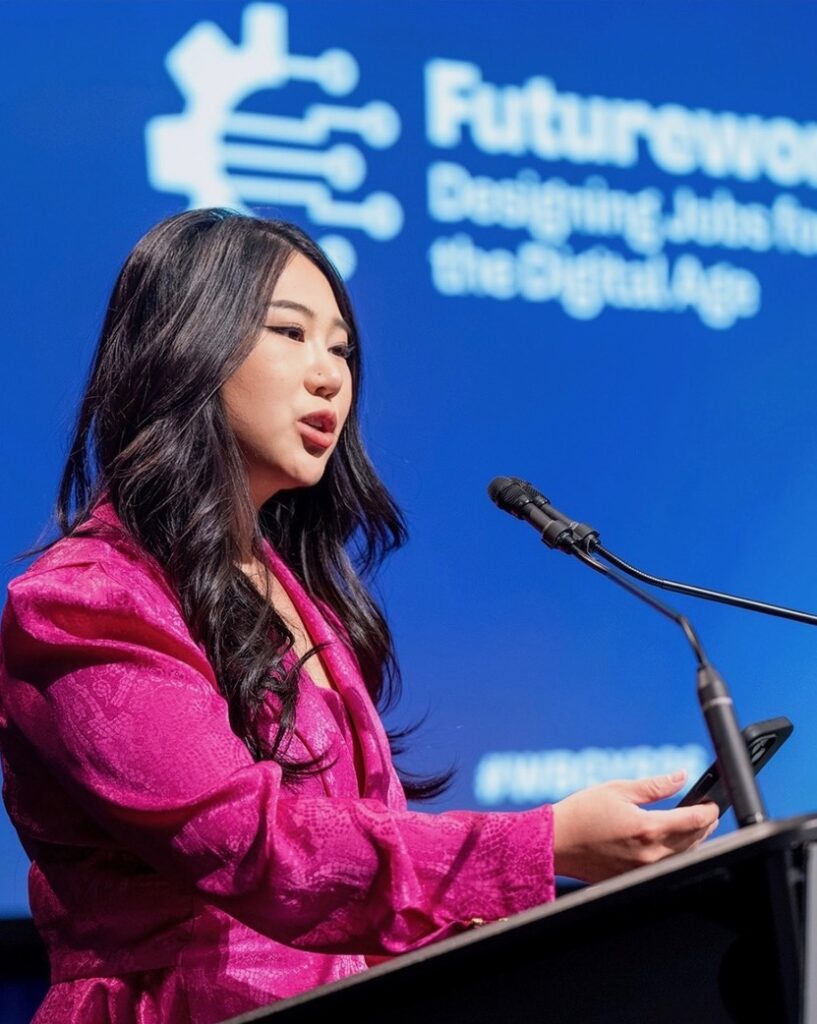
“One of the most important things I took away from McCourt is that policy is ultimately about people. That mindset has shaped how I approach my work in the Senate, especially when translating complex technical issues into legislation that actually serves communities.” –Amelie D’Hers (MS-DSPP’25), Legislative Aide in the U.S. Senate
“McCourt gave me a strong foundation for approaching problems through an evidence-based lens. Evidence-based thinking helps us understand what the problem really is, test assumptions and assess whether a proposed solution is likely to work. At the same time, many public problems cannot be solved by one institution alone. They require stakeholders to coordinate around a shared goal. That is why I believe public policy education is valuable across sectors. It gives people a common language and a shared way of thinking about problems, even when they come from different institutions or industries.” – Atsu Oguai, (MIDP’22), Partnership Specialist at the Multilateral Investment Guarantee Agency (MIGA), part of the World Bank Group