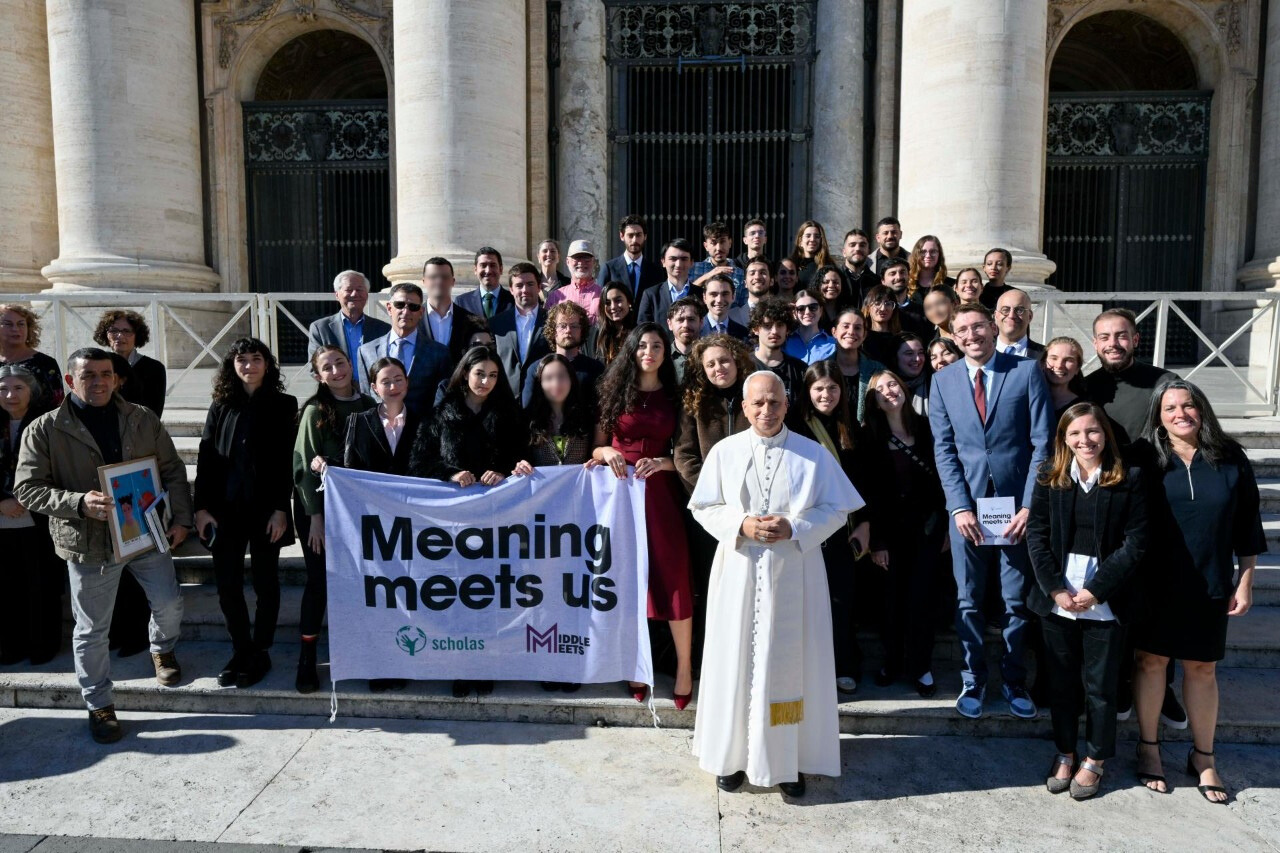
The Conflict Transformation Lab trains students to talk across divides.
This story was written by Kinda Ahmed as part of the McCourt School’s annual alumni magazine, Policy Perspectives.
Can sustained, face-to-face conversation bridge divides that feel insurmountable from a distance? Rachel Milner Gillers, associate professor of the practice at the McCourt School of Public Policy, challenges students to answer that question through the work of the Conflict Transformation Lab (CTL). She teaches an increasingly rare skill in the digital age: how to have meaningful, in-person conversations with people of different faiths, backgrounds and political beliefs.
The lab helps students develop diverse skills in negotiation, mediation and dialogue. Then students take these tools into the field, including into one of the most contentious areas of discussion on college campuses today: the war in Gaza. Milner Gillers partnered with Middle Meets, a forum for dialogue between college-aged students of different faiths, to meet a need she saw on campus in the aftermath of the October 7, 2023, attacks. Many students were “feeling othered and alone,” she said, with few spaces to process what they were experiencing.
Through the CTL, ten of Georgetown’s undergraduate and graduate students joined the Middle Meets initiative, bringing to the partnership a set of commitments that shape how Georgetown students engage, including community-building, a text-based methodology and a refusal to shy away from speaking up about difficult topics.
Before any conversation, participants read selected texts, sometimes representing competing narratives, or a grounding document like a United Nations convention. Then they engage on topics such as religious nationalism, antisemitism, Islamophobia and Zionism. Students also offer their perspectives on how it feels to share a campus with someone whose views are fundamentally different from their own.
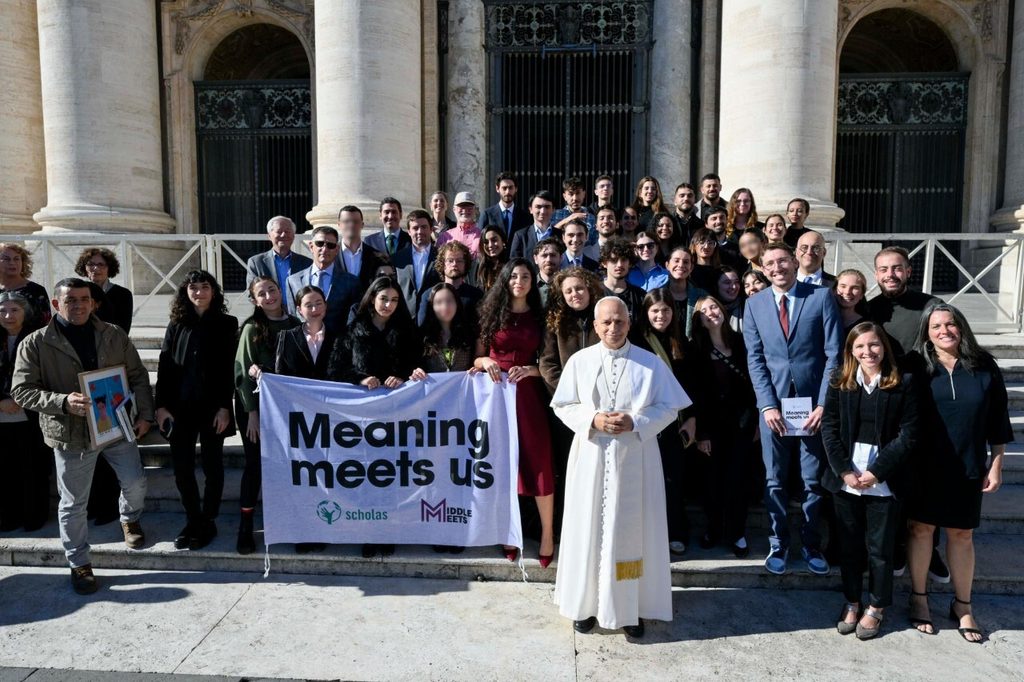
This cohort convened face-to-face in Rome in November 2025 at Scholas Occurrentes, an organization founded by Pope Francis to empower young people from diverse backgrounds to become active and engaged citizens. While in Italy, the group met with Pope Leo XIV and Cardinal George Koovakad, who both emphasized that bridge-building is a Vatican priority.
For a group representing a range of faith traditions, Georgetown’s Jesuit identity felt newly alive. “We talk a lot about Jesuit values but don’t necessarily make strong connections to them in the classroom,” Milner Gillers said. “It felt so real while we were at the Vatican.”
A second Georgetown cohort is set to convene in fall 2026, this time with Georgetown alumni helping to lead the experience.
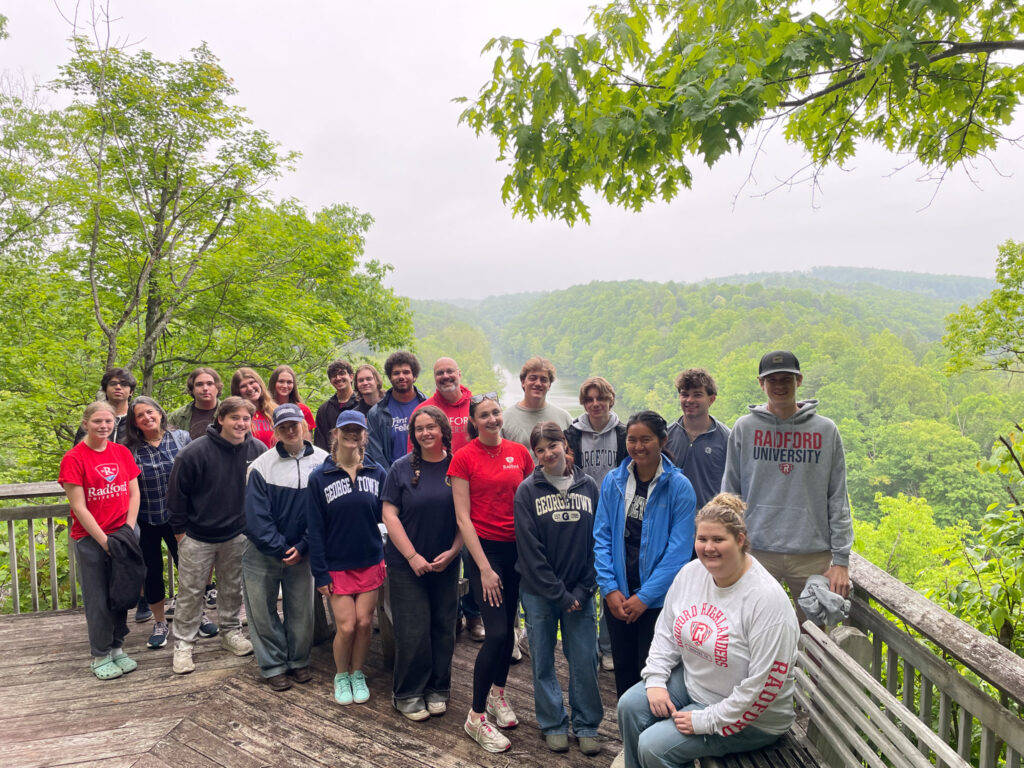
While Middle Meets engages students in dialogue about an international conflict, one of CTL’s longest-running programs applies that same approach domestically. Since 2018, Power of Dialogue: Deconstructing the Rural-Urban Divide has paired Georgetown undergraduates with students from Radford University in rural southwestern Virginia for a week-long immersive course to explore the economic, social and political histories of Appalachia and Washington, DC.
Through field visits to both areas, the students learn about the music of Appalachia, walk through DC neighborhoods most Georgetown students never see and learn where stereotypes originate and why they persist. Threaded throughout is the same skill-building work that anchors CTL’s other programs: exercises in deep active listening and practice sitting in the discomfort of hearing opinions that may spark disagreement.
CTL also brings this framework to McCourt students through clinics that help them build skills for constructive dialogue in preparation for careers in complex policy spaces. In February 2026, the lab hosted Facilitating Dialogue Across Divides, a clinic tailored to engaging groups on contentious issues. A second clinic, the Gender & Negotiations Workshop, partnered with McCourt’s Women in Public Policy Initiative student organization to examine how identity shapes decision-making.
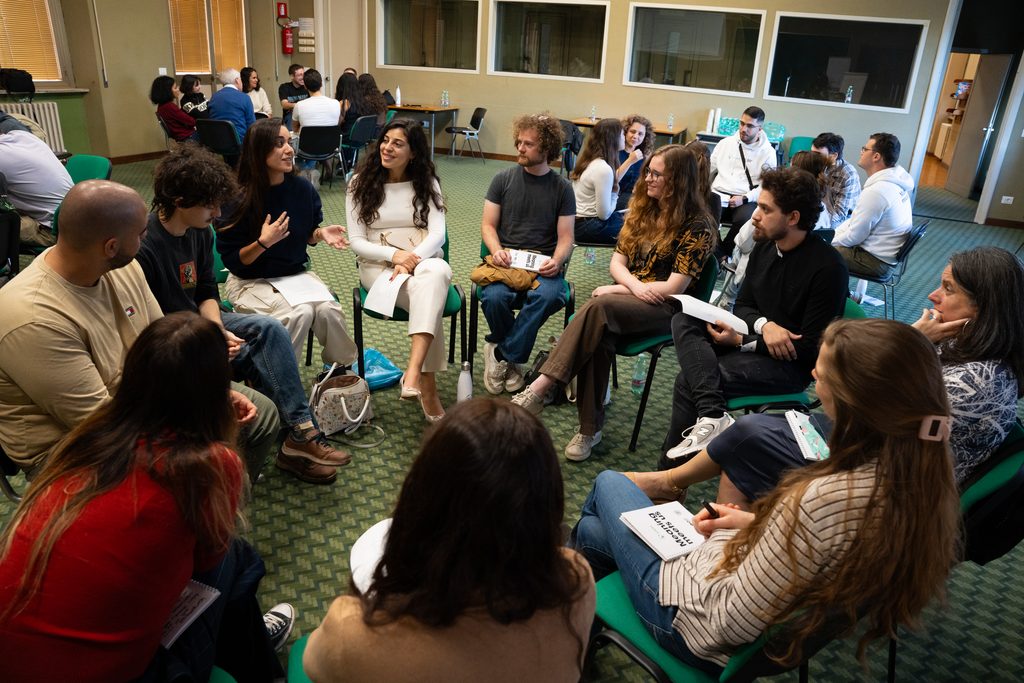
In each of these very different environments, the underlying capability CTL is designed to build is the same. Milner Gillers calls it “the gut punch,” hearing something that upsets you to your core and learning to sit with it rather than fighting back or scrolling away.
“It’s just an experience we’re not used to having,” she said. In a time when avoidance is easier than ever, CTL is asking students to do something uncomfortable but necessary: Stay in the room and hold space for dialogue.