Amy O’Hara, research professor and director of the Massive Data Institute at the McCourt School, explains why a recent Census Bureau report on non-citizen voting raises methodological and transparency concerns.
A report published by the U.S. Census Bureau claims to have identified 24,000 noncitizens among 128 million voter records. In a recent analysis, Amy O’Hara, director of McCourt’s Massive Data Institute (MDI) and a former Census Bureau executive, argues that the report departs from the agency’s long-standing norms.
O’Hara was also among the former Census Bureau officials and election experts who raised concerns about the report in NPR’s coverage, citing its lack of variance measures and the risk of mismatching different people with similar names.
In this Policy Insights Q&A, O’Hara explains what existing research shows about noncitizen voting, breaks down the unsigned report’s findings and outlines the questions journalists and policymakers should ask before citing similar reports.
Expert Insights from McCourt Faculty
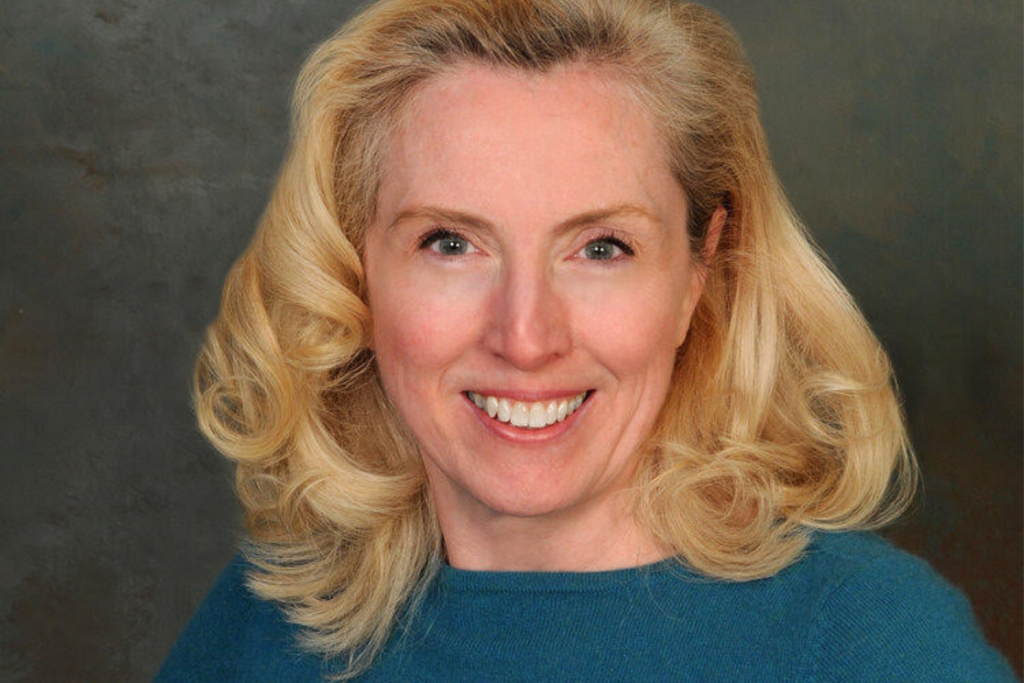
Amy O’Hara is a research professor, director of MDI and executive director of the Federal Statistical Research Data Center at the McCourt School.
Her research focuses on methods to improve secure data access, particularly involving administrative data with applications in education, justice and population measurement. O’Hara has published on topics including the measurement of income, longitudinal linkages to measure economic mobility and the data infrastructure necessary to support government and academic research.
Prior to joining Georgetown, O’Hara was a senior executive at the U.S. Census Bureau, where she founded their administrative data curation and research unit.
Q1
For people who haven’t been following this debate, what does the existing research tell us about how often non-citizens actually vote in elections?
Amy: Non-citizen voting happens very, very infrequently. This topic has been studied before, including by conservative think tanks, and they find almost no evidence of non-citizen voting. The claim that it’s happening in meaningful numbers has been examined, and it just doesn’t hold up.
Q2
What did this recent report, published under the Census Bureau’s name, claim to find?
Amy: The report said they assessed 128 million records from a commercial voter database. They were doing data linkage, which is something I’m very familiar with; it’s one of the things I led when I worked at the Census Bureau before coming to Georgetown.
They took the voter records and matched them to a non-citizen roster they built. They claim to have found 24,000 matches between these lists, and they say millions of records remain to be analyzed. Even the U.S. commerce secretary promoted the report, saying this is just the beginning, so we anticipate additional reports on similar topics.
The issue is that the way they did the linkage was suspect. There wasn’t much transparency in the reporting, and they were doing a population-level linkage with records that don’t have much identifying information. Your voter file doesn’t include your Social Security number (SSN), so you’re doing name matching. When you match at that scale, you’d expect a certain number of false matches. So 24,000 sounds like a big number, but it’s actually very small when you started with 128 million people.
Follow-Up: For those who don’t know, could you please explain data linkage?
Amy: It’s where you look for pairs of records between two lists. Name matching is challenging because people have very similar names, so methods matter a lot when determining whether or not there’s a match. This report was notably silent on that; it didn’t explain how the matching was done, which raises concerns about how accurate the matches are.
Q3
The report was published under the Census Bureau’s name but without specific authors. Why does that matter?
Amy: When an official publication comes out from an agency like the Census Bureau, the largest statistical agency in the United States, it typically comes with a set of information. It would have authors and name the responsible division. It would be clear about the motivation for the analysis and which program it’s intended to benefit, whether that is the decennial census, the economic census and so on.
The missing pieces, such as no authors and no transparency about the datasets and methods, beg the question of whether there was political interference.
When I worked there, a report like this would have gone through many gates. For instance, it should have gone through the Bureau’s risk checklist, because in my opinion this project hits a lot of sensitivity flags. It involves a sensitive population: non-citizens. It covers sensitive topics like politics and illegal conduct. Additionally, there’s a perception that statistical data are being used for political purposes.
Follow-up: What else jumped out at you when you read the report?
Amy: Along with not listing authors, which unit produced it, or which program would use the findings, the report lacks transparency and there are some internal inconsistencies about the data sources.
The report talks about millions more records needing evaluation, but if you do the math on the numbers they give, that doesn’t add up. What records are they talking about? That kind of discrepancy makes me want more information. I’d love to understand how it was done and under what authority.
Q4
Policymakers rely heavily on agencies like the Census Bureau for objective data. What are the biggest methodological problems with how this report reached its conclusions?
Amy: First, the data weren’t clearly documented. There was no information on how complete the voter file is, or how many records were missing names, birthdays, or addresses, all of which would be important for linkage. Other Census research using vendor voter data found gaps in more than half the states, plus duplicates. The report’s silence on data quality is a big methodological flag for me.
The non-citizen sources were also inconsistent. The analysis used two files: the voter file and a non-citizen register they built. In constructing the non-citizen register, in one part of the report, they mention IRS data, but in another section listing sources, the IRS data isn’t included. Having worked there, that’s the kind of thing that should have been cleaned up before release. It’s as though the report skipped a fact-checking step, and the fact that it went to print with internal inconsistencies raises questions.
Second, the matching method stood out. The authors used a matching system I know well, but it works best on files with SSNs. Voter files don’t have SSNs, and many people in the non-citizen file don’t either. I’d want to see how they did the join, how they resolved people with similar names, and how they handled records with partially missing information.
Finally, Census reports talk about accuracy, sometimes a great deal. They discuss variance and want you to consider measurement error. Here, that would be linkage error, and the report was completely silent on it. That’s another departure from long-standing norms.
Q5
What would a credible study of non-citizen voting look like? And what should journalists and policymakers ask before citing a report like this?
Amy: I’d reframe the question to ask what any report from a statistical agency should have. It should have authors and document its clearance and approvals. It should be clear that it serves a program purpose, not politics. It should describe all the data sources, dates and counts and how complete the datasets are. It should explain how the matching was done, the match thresholds and how they resolved the issues I described. It should report uncertainty: margins of error and known biases. And, as these reports typically do, it should show how its results are distinguishable from linkage error.
I want to stress that arithmetic. If there were even a 1% matching error across 128 million records, that would be 1.28 million records. The 24,000 falls well within that window. It’s very wonky, I know, but people should think about margins of error and whether a result is real or just a numerical artifact of using lots of records.
Also, when a report comes out, ask how it fits with decades of state audits and academic research, and how the headline numbers compare to the amount of error you’d expect. For a policymaker or reporter, the question is: What data did they use, and how good is it?
If you can’t answer those questions, I’d say you don’t cite it as evidence. It can be part of a body of knowledge and help you ask more questions, but you don’t ignore decades of other evidence and call this the new evidence when it’s missing everything that would make it credible.