A new book by McCourt School Associate Professor Jonathan Ladd and Professor Lisa Singh explores how presidential campaigns compete for attention in a changing media landscape.
In their new book, American Presidential Campaigns in the Attention Economy, McCourt School Associate Professor Jonathan Ladd and Professor Lisa Singh examine how the American media landscape has shifted from a world where people chose their own news to one where algorithms choose it for them.
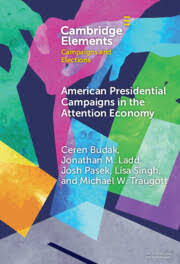
Drawing on survey, social media and news coverage data from the 2016, 2020 and 2024 presidential elections, the two scholars find that no presidential candidate has adapted to this new attention economy better than President Donald Trump, but that dominating headlines and social feeds have not always translated into net favorability.
We spoke with Ladd and Singh about what their findings mean for the future of shared civic knowledge and what potential policy solutions could be implemented.
Expert Insights from McCourt Faculty
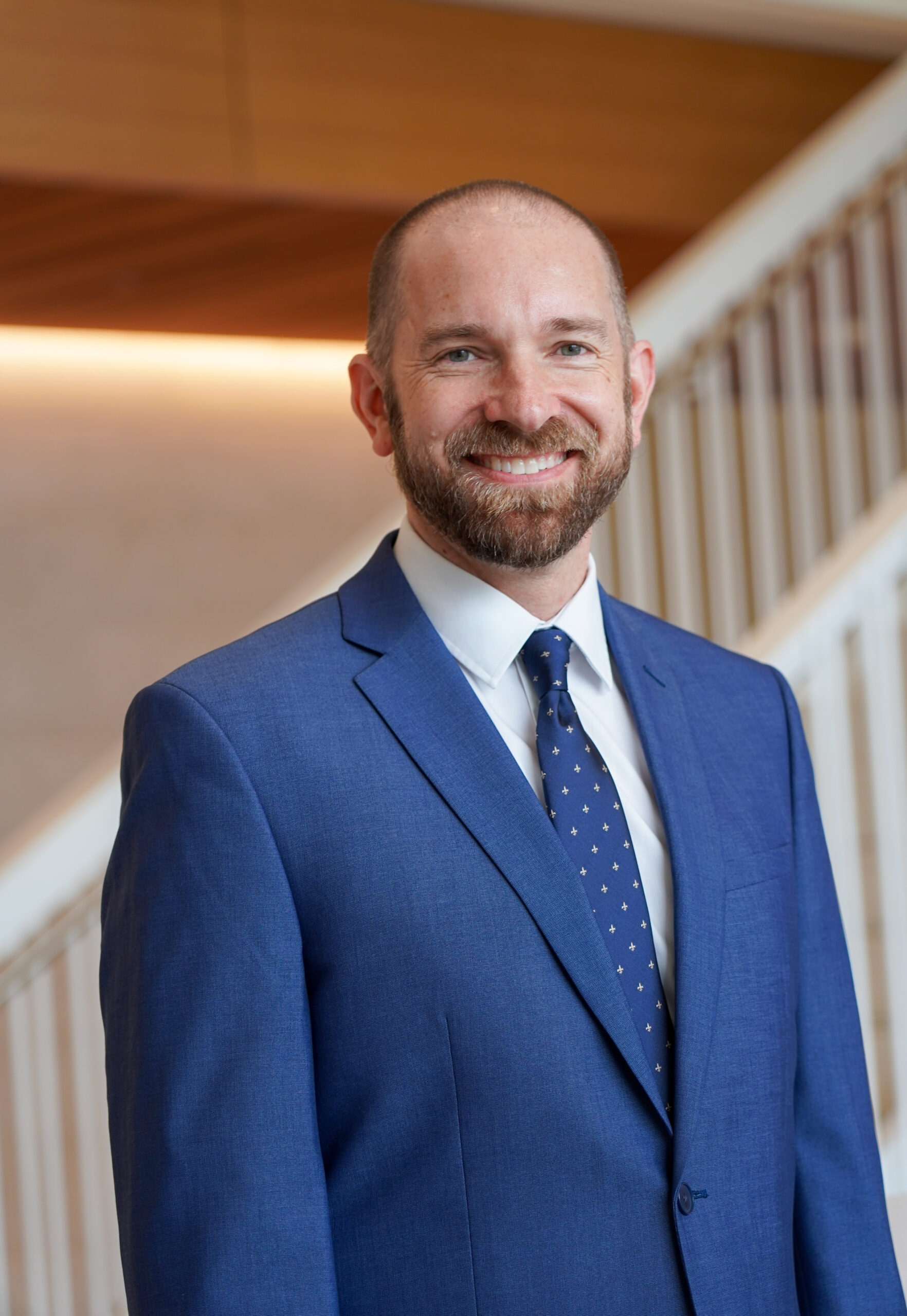
Jonathan Ladd is an associate professor at the McCourt School of Public Policy. He is also an associate professor (by courtesy) in the Department of Government, a faculty affiliate of the Massive Data Institute and the Lab for Globalization and Shared Prosperity, and faculty advisor to the Institute of Politics and Public Service (“GU Politics”).
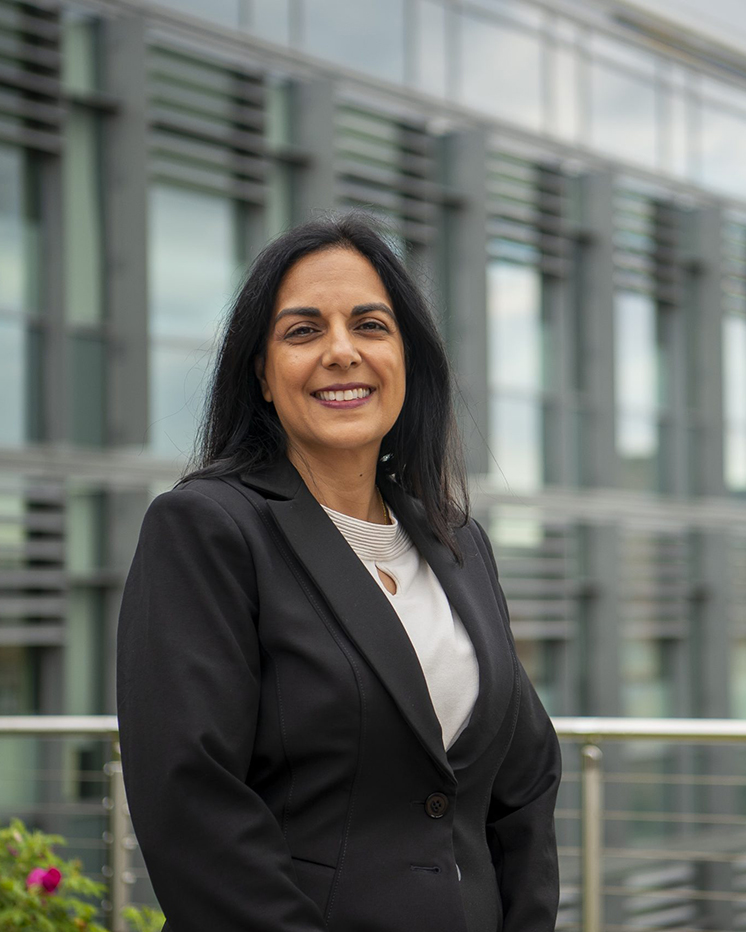
Lisa Singh is a professor in the Department of Computer Science at the College of Arts and Sciences and is a professor at the McCourt School of Public Policy at Georgetown University. She is also a Sonneborn Chair for Interdisciplinary Research and is affiliated with the Institute for the Study of International Migration. She served as the Director of the Massive Data Institute (MDI) at the McCourt School of Public Policy and on the Technology and Society Steering Committee.
Q1
For those who haven’t read the book: what got the two of you interested in studying the attention economy with regard to presidential campaigns?
Jonathan Ladd: We were interested in campaign media in general. We were tracking both what was covered in the media and what people actually absorbed and remembered during the transition toward an attention economy. We tracked this during the 2016, 2020 and 2024 presidential elections, though not a lot of the 2024 data is in this book. More specifically, we were interested in the changing media environment and how it affected what stories people heard about and what they didn’t hear about. People’s news consumption patterns continued to change — they were consuming less and less television. People were also exposed more and more to information determined by algorithms: information determined by what would get more engagement or a reaction from them, or make them want to watch it.
The world changed in front of us. Consumption patterns increasingly shifted toward what we might broadly call social media, or more specifically, any media where you don’t self-select what you want to watch or read. Instead, something is recommended to you through algorithm-based media.
During the elections we studied, Donald Trump was a candidate. One thing he’s very good at is getting attention, both in the old media system and the new one. His style of continually feeding the press new stories meant there was always something new. That was effective in the old media system, but also very well adapted to the new media consumption patterns.
Lisa Singh: I came to this research with more of an expertise in data more broadly. My interest was in understanding how to connect what people were consuming with what they remembered, using this novel data. We have survey data showing what people remember, but also social media data, newspaper data and television data. The question became: how do we pull that all together to understand the connection between the two?
Q2
One of the main findings of the book is that President Trump consistently dominated media attention throughout his campaigns, but that didn’t necessarily translate into positive coverage. Can you walk us through that finding?
Jonathan Ladd: In what people now call the attention economy, the conventional wisdom is that the candidate who gets the most attention will be the most popular and will win. Our finding is: not necessarily. Getting the most attention is not a guarantee of popularity or of people remembering positive things about you.
One other difference we found: we separated news sources into high-quality (good reputation for accuracy, less bias) and lower-quality sources. Trump consistently received more media mentions than his opponents across all source types, but his lead was even larger in high-quality sources during the 2016 and 2020 elections. In fact, our overall finding is that Trump’s advantage tends to hold steady, or grow, as source quality increases. This pattern showed up not just in traditional media, but also on social media and in people’s open-ended survey responses about what they remembered. I’ve always found that a surprising result.
Lisa Singh: From the data side, if you just looked at 2016, you’d think — wow, Trump received a lot of traditional media and social attention about a range of topics. That helped him a great deal. Even though there were scandals that came up, none of them maintained persistent media coverage.
In 2020, the data tells a different story. Trump maintains attention. However, things flip a bit: now he can’t get away from the COVID-19 pandemic topic. He tries to change the topic, but that is what people remember because of its impact on their daily lives.
Meanwhile, in 2020, Former President Joe Biden doesn’t have a scandal that sticks to him in the same way. Even though he’s getting less attention, there isn’t a constant reminder of some sense of negativity toward him. The data tells an interesting story about how certain negative topics didn’t stick to Biden the way they did to Trump. So even though Trump still gets most of the attention from the media, he loses. This showed us that attention alone did not equate to popularity.
Q3
The research suggests social media platforms and algorithms are now shaping campaign narratives more than traditional legacy outlets once did. What’s the role of public policy in shaping how platforms handle political content in this environment?
Lisa Singh: It’s important to note that you have to have an algorithm to recommend anything. You wouldn’t want it to be completely random because that could lead to poor quality information being shown to vulnerable populations. For example, inappropriate content could surface for kids. So complete randomness isn’t the answer. But the idea that you should only get what the algorithm believes you’ll really like, to keep you engaged and on the platform longer and keep advertisers happy, is also not a good direction. Those are the two extremes and we need recommendation algorithms to be somewhere in the middle.
I’d love to see algorithm transparency, policy that requires platforms to disclose how their algorithms work to an independent, expert group, so the methods can be assessed and the impact on different subpopulations can be analyzed in more detail. It matters what values are encoded in an algorithm and whether they align with societal values. It cannot just be about profit.
There’s also limited user control right now. Platforms should give users more control over and empower them to easily see a wider range of content. Some already let users turn off algorithmic recommendations in favor of, say, a purely chronological feed; there are other simple tools that would align better with our values of maintaining individual privacy, downranking or removing disinformation, and giving users more agency to choose what they see and how they interact with the platform.
Child safety is one area we can probably all agree on, and it’s already being worked on. The last thing I’d mention is platform accountability. Right now, there’s limited liability for companies that share dangerous content online. Some policies in cases of severe harm would be beneficial.
Q4
Your findings show that partisan audiences consume different content about the same political events. What does this mean for the future of common civic knowledge?
Lisa Singh: I think this is one of the biggest problems we have today: we don’t have a shared set of facts anymore, or shared information sources we trust and feel are reliable. I view this as a crisis. If we can’t agree on what’s true and what’s false as a majority, how are we going to agree on anything else?
Jonathan Ladd: In an earlier era of media studies, the “high-choice era,” when people were getting news mostly from cable television and the early, more static internet, we tended to blame people for putting themselves into information bubbles, since they had a lot of choices and were self-selecting into sources that matched their partisanship. We can’t really blame people as much anymore: rather than actively choosing and self-selecting into a bubble, some people are unintentionally fed one, determined by an algorithm.
Q5
Are there policy interventions that could help bridge the civic knowledge gap?
Jonathan Ladd: Sources matter. Getting more credible outlets with real news values into the mix. For example, local news is not covered as much anymore, and the economic model has largely collapsed. That’s not an easy problem to solve, but it creates real difficulties for people trying to get information about their own localities.
There’s been a movement toward more nonprofit news organizations supported by foundations and charitable giving. For philanthropy interested in making America a better place, this seems like a great target — nonprofit, endowed news organizations that can get information into the marketplace, since we haven’t really invented a new economic model that works well, apart from one or two national organizations.
Lisa Singh: I don’t think there’s a panacea. This is hard work. One thing we need to do is teach people to be curious enough to want to hear alternatives to their own information, to check whether it holds up. Critical thinking is really important, and in an era where AI is here to do so many things for us, that capacity for critical thinking risks deteriorating even further. So it’s important to think about policies that broaden the landscape of information people are exposed to and help them think critically about it.
There are a lot of discussions about what those policies should look like. I don’t think we can narrow it down to one or two things. We need a whole tapestry of them working together to reduce this gap.
American Presidential Campaigns in the Attention Economy was funded by the support of the National Science Foundation (grants #1934925 and #1934494), Georgetown University’s Massive Data Institute (MDI), and the Michigan Institute for Data and AI in Society (MIDAS).