For seven years, McCourt’s experiential program has been equipping incoming students with the ‘power skills’ to lead in public policy.
For new McCourt students, their first lesson begins outside the classroom – in Foundations. The required course, led by the School’s faculty, staff and Leadership Fellows, is designed to equip incoming students with what Associate Professor and Foundations facilitator Jennifer Tobin calls ‘power skills,’ such as ethical leadership, collaboration and engaging with bias.

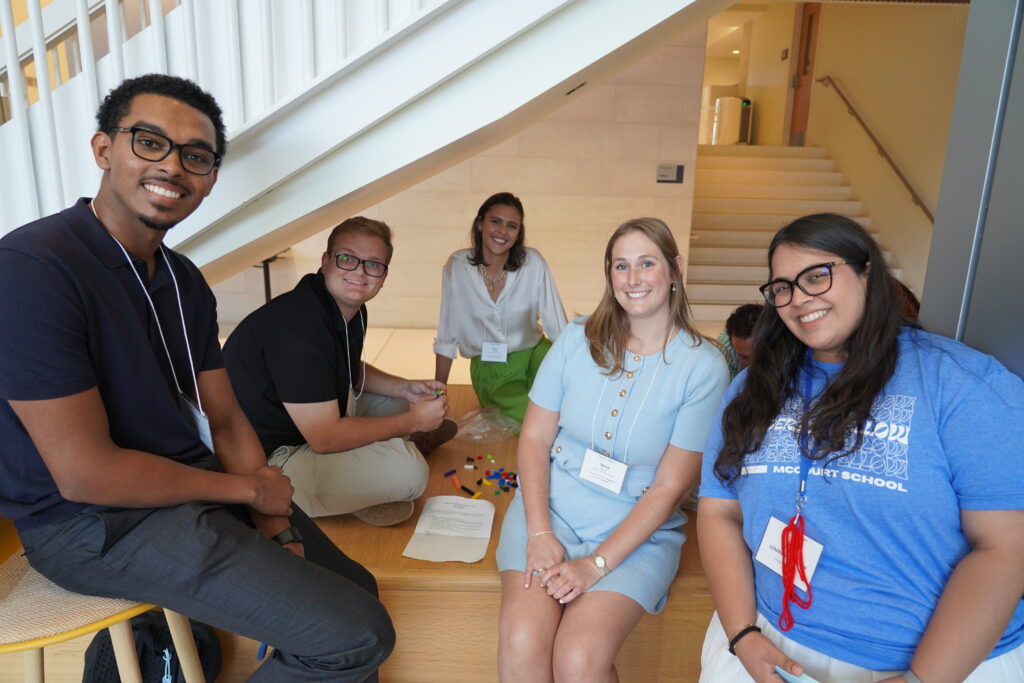
What is unique about Foundations, which takes place just prior to the start of students’ first semester, is that it is entirely experiential. “Students do not sit through lectures about teamwork,” says Tobin. The required program is designed for students to work through real scenarios and then debrief on what happened in the room.
Multiple skills are taught together through the program’s learning model. A single exercise tasks students with collaborating, communicating and confronting their own assumptions at the same time. This is intentional, Tobin says, “these activities are designed to mimic how these skills show up in real work scenarios.”
She describes an activity where students are split into groups to solve a mystery, and the information needed to solve it is broken across teams. The only way for students to solve the mystery is if everyone shares the information they hold, and many members have reasons not to.
“Teams usually struggle, and that’s the point,” Tobin says. After the exercise, students debrief on the activity and communicate through the obstacles they faced.
“We walk through how groups behaved and why, and connect it to what organizational behavior research tells us about how groups handle private information,” says Tobin. “Students leave able to notice when a team is holding something back, and with the language to name it without putting anyone on the defensive.”
Phoebe McIntosh (MPP’28), a first-year student, saw this play out directly. “Activities like mystery solving opened up an avenue to explore communication and leadership styles in a low-stakes way,” she says, one she’s already seen “paying off in trust and classroom collaboration.”
That groundwork, she adds, has carried into her coursework: “Foundations really did help build a baseline of confidence and intentional communication from which to grow as in-class collaborators and professionals.”
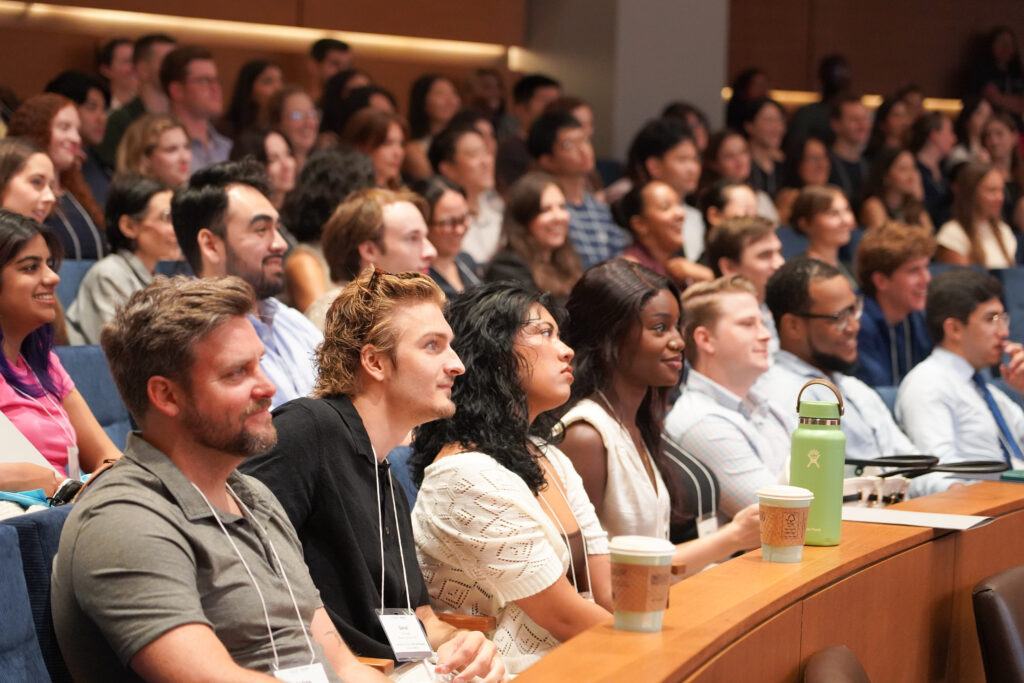
Foundations also teaches students how to engage with bias. To help teach this skill, students engage in a Social Equity Impact Assessment simulation, where they receive a policy that looks neutral, along with demographic and contextual data. They then have to work out who it would affect differently and what they would change before the policy goes into effect.
The simulation is designed to treat bias as “something you analyze, rather than something you simply hold,” Tobin explains. “Being able to analyze your own bias is an important skill in the field of public policy, so this is a useful skill as students become the decision-makers.”
With recent advancements in AI, Tobin argues the case for teaching power skills is more important than ever. She emphasizes that AI cannot sit in a room with people who disagree with them and move them, decide what question is worth asking or carry responsibility for a decision that affects real people. “Our students will increasingly be hired for their judgment and for their ability to lead other people, and neither of those develops on its own,” says Tobin.
“Policy failures are rarely analytic failures. A well-specified policy dies because no one built the coalition to pass it, or because the people who had to implement it were never brought along. Those are collaboration and communication problems, and for a long time we expected students to simply pick them up by knowing about them, but not practicing them,” she says.
Being able to work across differences—in expertise, perspective, position and experience—is essential to leadership, and also for learning. Foundations helps equip McCourt students to productively engage with others and learn from our rich community of students, staff and faculty—inside the classroom and beyond.
– McCourt Professor Maria Cancian
Power skills in practice: A Leadership Fellow’s perspective
Each year, Foundations is co-led by a cohort of Leadership Fellows, returning students who partner with McCourt faculty and staff to help facilitate Foundations and other engagement activities for incoming students.
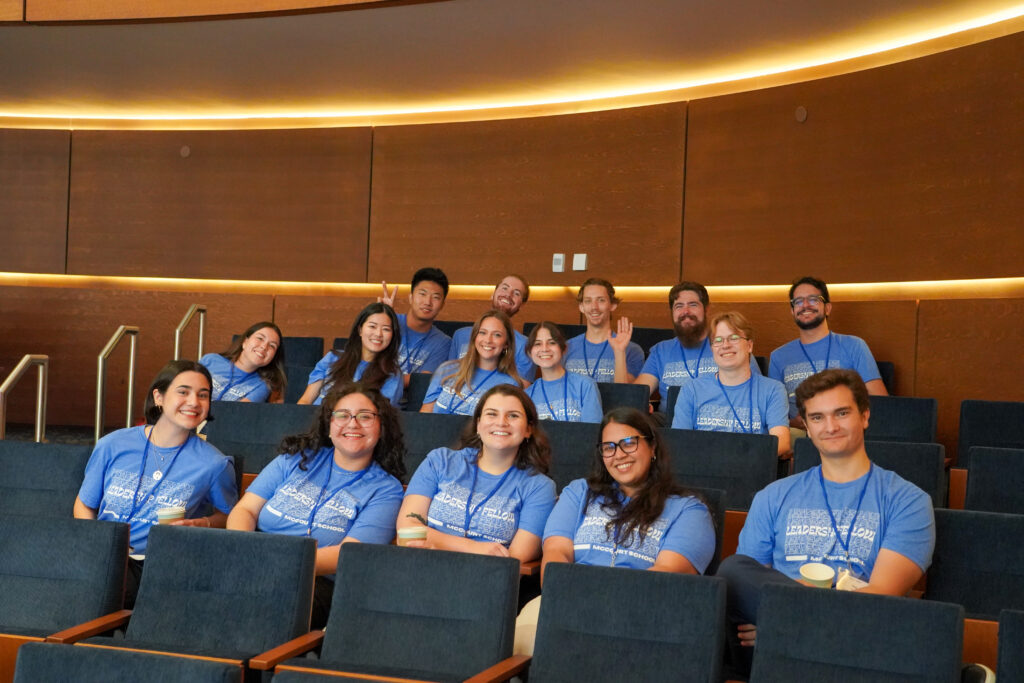
For Helena Monsivais (MS-DSPP’27), a Leadership Fellow, Foundations shaped the way she approached collaboration for the rest of her time at McCourt.
“So many projects in the first year of being a student are collaborative, and those exercises set us up to work well on teams, establish expectations and tackle challenges together,” Monsivais says. “The structure of Foundations is so unique and puts students on the right track to a meaningful and successful McCourt experience.”
She describes how some of her closest friendships at McCourt trace back to her formative Foundations experience. “I met some of my closest friends that first week, and built skills I still rely on in every area of my life.”
Reflecting on Foundations, she shares how, across differences, she felt community. “What struck me most is that across all different personalities and leadership styles, everyone showed up daily and went out of their way to show up for everyone else.”
She pointed to examples of that spirit in action: fellows who were especially skilled at helping students navigate Georgetown’s policies and processes, others who made a point of drawing quieter voices into the conversation and one fellow who put together a “things I wish I knew” guide for incoming first-years.

“Each example demonstrates the initiative and collaborative spirit of this leadership team,” she says. “I feel so fortunate to have learned from and worked alongside some of the best at McCourt.”
Foundations is where the McCourt community truly takes root. Watching incoming students from so many different backgrounds come together, share their unique perspectives and start supporting one another from day one is easily one of the most rewarding parts of running this program.
Paul Nooney, director of student engagement