Student teams in the McCourt School’s Policy Innovation Lab partner with local organizations to shape equitable public policy.
Rooted in a commitment to serving Washington, DC’s most marginalized residents, Georgetown McCourt’s Policy Innovation Lab (PIL) offers hands-on experiences that help students develop the skills to create policy that serves and responds to community needs.
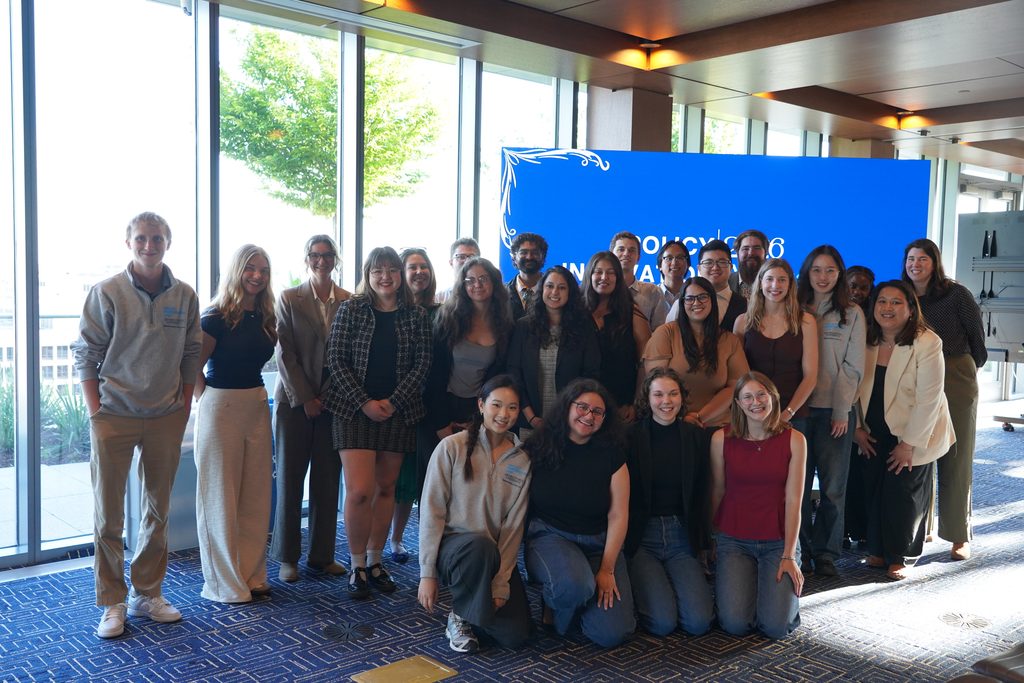
The Lab builds partnerships with local organizations and community members in Wards 7 and 8. A critical driver of the Lab’s work is making connections between public policy and the people and groups it is aimed at serving. Student teams take on projects with community organizations spanning equitable economic development, racial equity in the workforce, food insecurity, educational opportunity, violence prevention and affordable housing.
Gun violence is a national-level issue that requires a very localized and community-grounded policy response. By building relationships with organizations deeply involved in this work, our students gained a better sense of how local, state and national policymakers can support this effort.
– Amanda Lu, Executive Director of PIL; Faculty Director for Academic Programs in Policy Practice and Assistant Teaching Professor
Over the past year, McCourt graduate and undergraduate students partnered with two DC-based nonprofits working to end gun violence: Guns Down Friday, which builds safer communities through education, leadership development, and community action, and the T.R.I.G.G.E.R. Project, which tackles youth gun violence at the intersection of youth development and public health. Through these partnerships, students conducted research and analysis to help advance equitable, community-based policy.
Using community voices to inform human-centered public policy
For Morgan Rapsky (MPP’27) and Katie Kolodziej (MPP’27), their youth focus group with Guns Down Friday began with a folding table, a beach ball and “lots of pizza,” as Kolodziej put it.
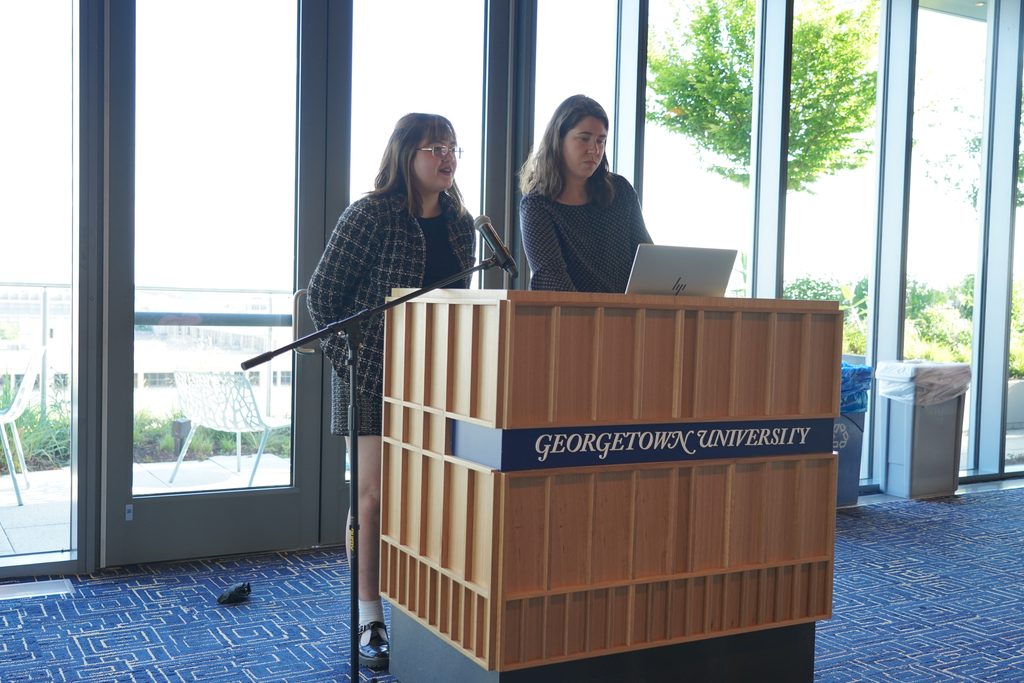
Their project centered on the organization’s Friday Night Safe Space Mentoring program, a weekly gathering for local youth. Through a focus group with teenage boys affected by gun violence in DC, the students set out to learn what drives success in the program, bridging the organization’s leadership vision with the perspectives of the youth it serves.
The relaxed opening at the focus group session was intentional. “We prepared a protocol and facilitated the conversations, but also had to be flexible, adjusting questions based on the topic and what the youth wanted to share,” Kolodziej said.
What she and Rapsky learned reshaped how they thought about policy. “Safety, for these teens, wasn’t only physical. It meant feeling seen, understood and free to be themselves,” said Kolodziej.
Kolodziej and Rapsky also participated in community events such as a holiday toy drive and engaged informally with youth and staff through programming activities, including basketball. These experiences provided deeper insight into the program’s culture, relationships and impact beyond formal interviews.
Through this participation, students shaped a broader analysis of the program — helping them identify what was working, for whom and how success could be measured going forward.
That same commitment to community listening carries into the T.R.I.G.G.E.R. Project, a DC-funded community safe space where Nicholas Peabody (MPP’27) and Katherine Parrish (C’27) worked alongside youth to translate lived experience into policy action.
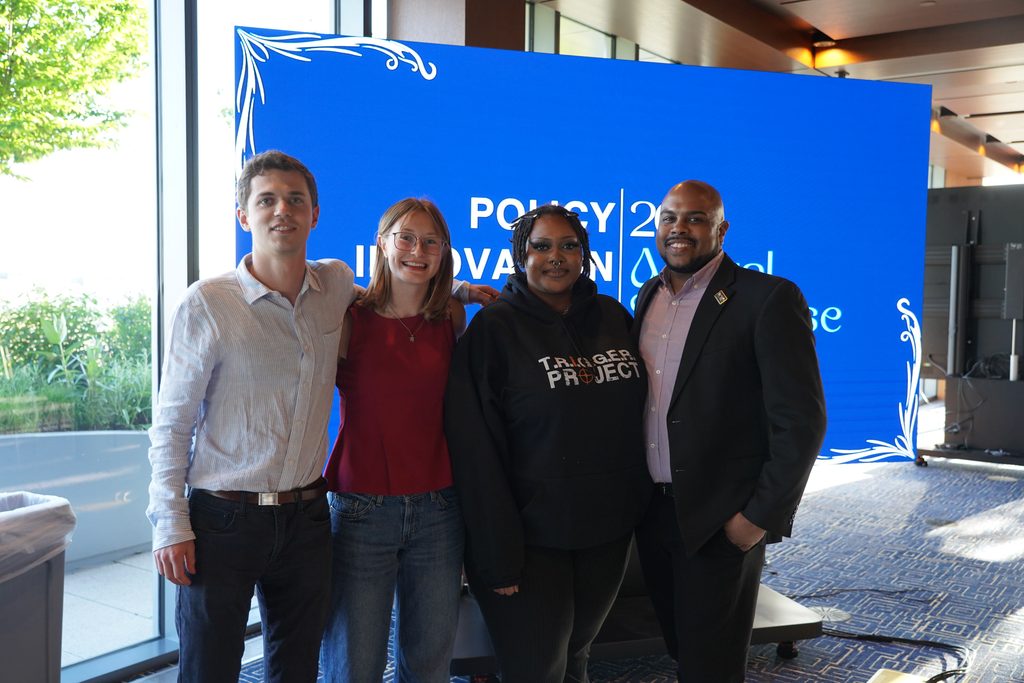
“Working on the T.R.I.G.G.E.R. Project supplemented my public policy education by allowing me to see policy in practice in DC,” Peabody said. For him, the most powerful part was watching that process reach its natural conclusion: helping a student draft testimony, then watching them deliver it.
That testimony, delivered before the Washington, DC, Committee on the Judiciary and Public Safety, chaired by Councilmember Brooke Pinto, highlights the throughline connecting both projects. Just as the young people in Guns Down Friday’s listening sessions found a space to be heard, the youth who partnered with the T.R.I.G.G.E.R. Project were given a voice, speaking directly to the lawmakers who govern their neighborhoods.
Both of these initiatives reflect PIL’s approach to shaping better outcomes for local communities. Students go beyond studying a policy problem in a classroom. Instead, they sit in the same rooms as the people living it, learning policy through practice.