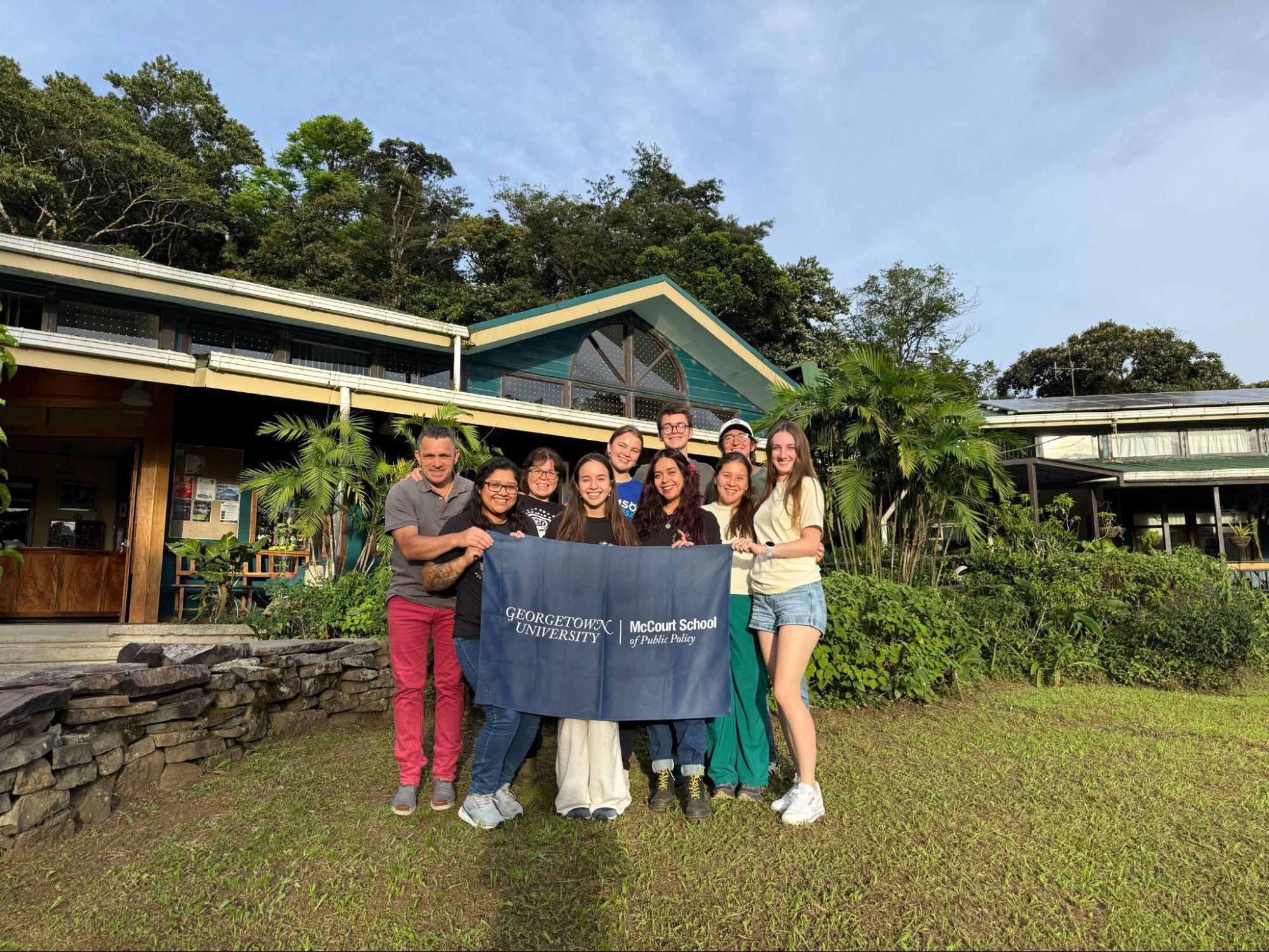
Two master’s in international development policy students share what a week with a nonprofit client in Monteverde, Costa Rica, taught them about turning policy into sustainable development for local communities.
This story was jointly written by Kate Barnes (MIDP’27) and Rebeca Stacey Calle (MIDP’28), project coordinators for the McCourt School’s Policy in Practice (MPiP), a student organization that leverages evidence-based policy tools to maximize partner organizations’ capacity to deliver and evaluate social impact within Latin America and the Caribbean.
This year marks a milestone for MPiP. Following its 20th anniversary, McCourt’s student-led consulting organization is working with three nonprofit organization clients for the first time this academic year: Enseña Perú in Lima, Reinserta in Mexico City and the Monteverde Institute in rural Costa Rica.
As project coordinators for the Monteverde Institute partnership, we traveled to Costa Rica to spend time with our client and help shape our team’s work for the year.
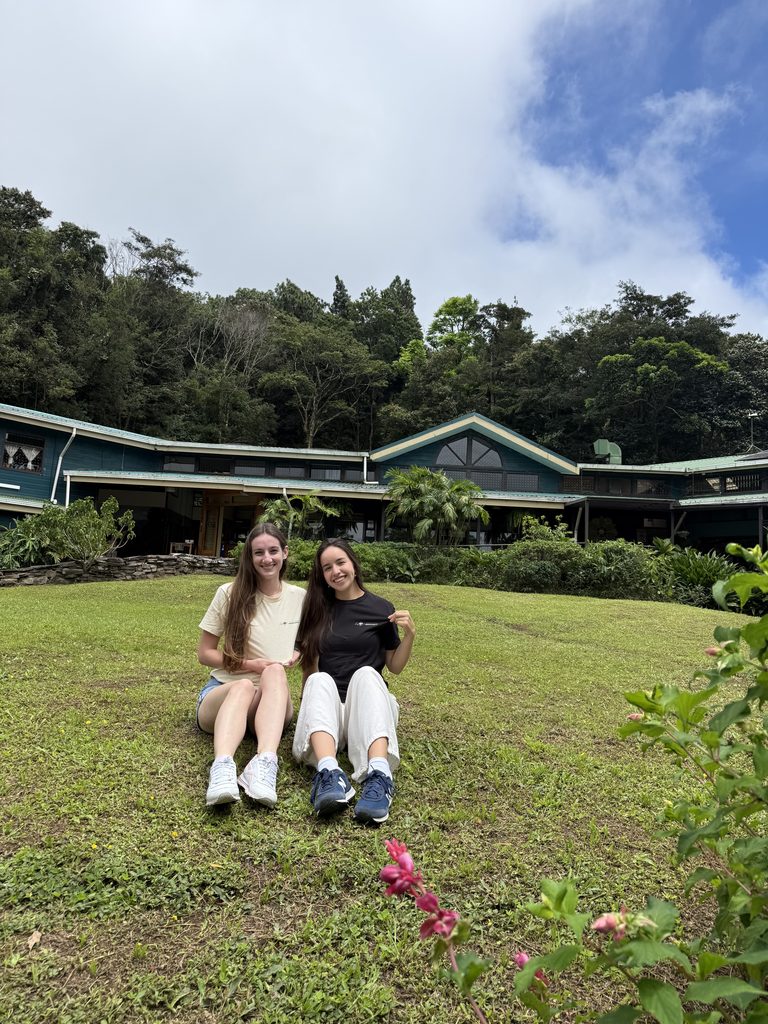
MPiP allows McCourt students to apply their skills to projects developed with partner organizations across Latin America and the Caribbean. Our role as project coordinators is to co-lead the strategic direction of the project, working with the Institute and our student team to define priorities and translate them into useful recommendations.
Located in a region that has become a major ecotourism destination, the Monteverde Institute is a nonprofit organization that brings together education, research and community initiatives to support sustainable development and the well-being of residents.
Our partnership focuses on the Institute’s monitoring, evaluation and learning systems (MEL), which is how it collects information about its work, assesses its results and uses what it learns to make decisions. We are helping the Institute examine these practices and better understand how its programs contribute to its impact in the community.
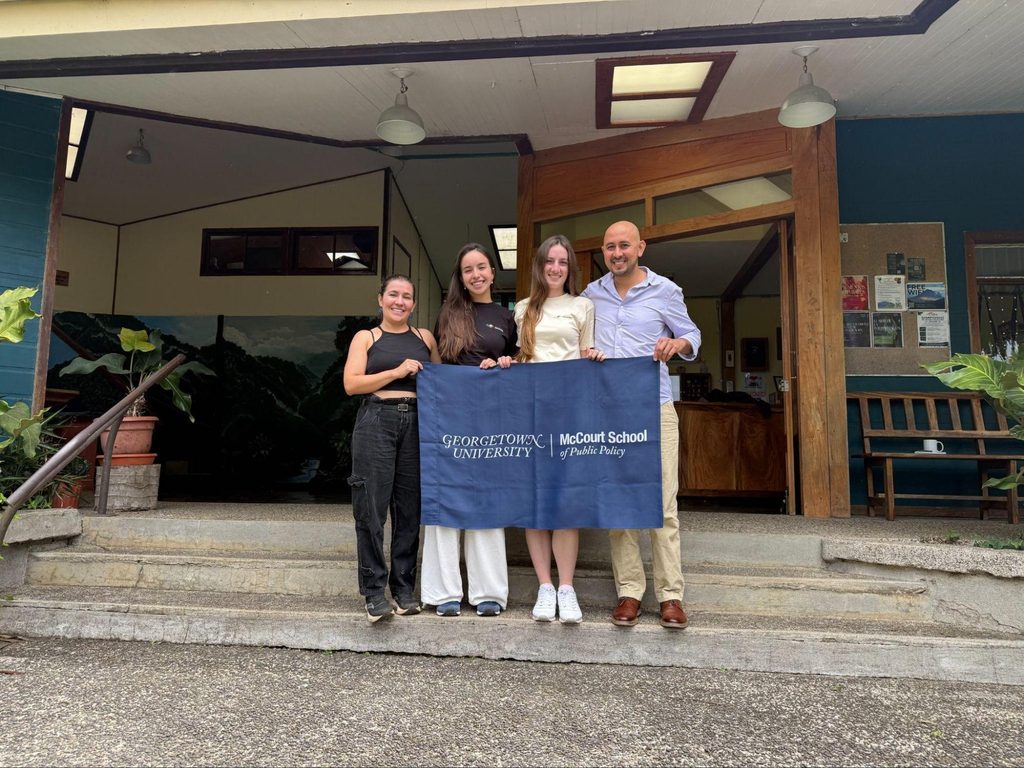
Before the trip, our team reviewed surveys, spreadsheets and other materials shared by the Institute. Visiting Monteverde gave us a much fuller understanding of what those documents represented. Over several days, we spoke with staff working in community health, conservation, research, homestays and academic programs. These conversations helped us connect the information we had reviewed with the daily work of the people collecting and using it.
The breadth of the Institute’s work stood out to us. Evaluating a student’s academic experience involves different considerations. Our recommendations will need to account for those differences while helping the Institute bring information together across programs.
The conversations also helped us refine the project’s direction. Along with reviewing data collection and reporting practices, we discussed how our work could help clarify the connections between individual programs and the Institute’s broader goals. Being in the country allowed us to ask follow-up questions, revisit our assumptions and develop a clearer sense of what would be most useful to our partners.
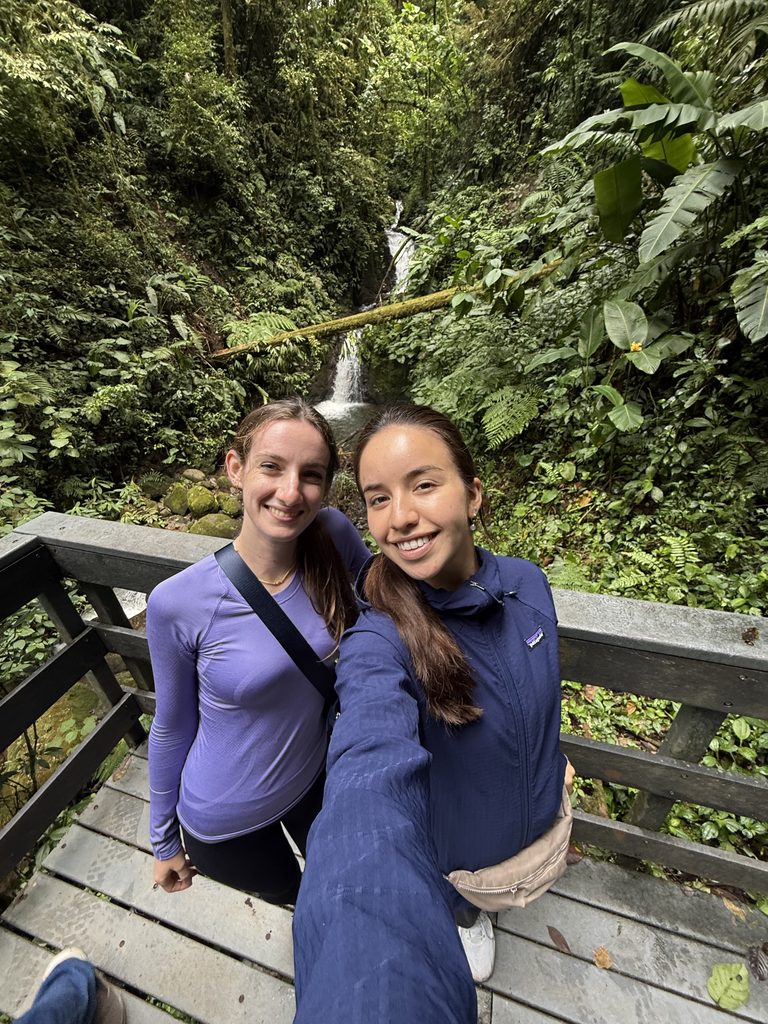
One highlight was joining our client contact, Ale, for a hike celebrating the Monteverde Cloud Forest Biological Preserve’s 54th anniversary. The celebration brought together residents to explore the cloud forest, alongside community organizations. Some of the volunteers were also Institute staff, who we got to see participating in the community beyond their day-to-day roles. After spending our meetings learning about the Institute’s programs, it was meaningful to see how closely its people and work were woven into local life. The event gave us a fuller appreciation of the Institute’s place in Monteverde and the relationships behind the work we are helping it understand and evaluate.
For us, this was a practical extension of our McCourt education. Our coursework gives us tools for analyzing data, evaluating programs and thinking through organizational challenges. Applying those tools in a client partnership requires us to understand how an organization operates, what staff already know and what they need from the information they collect. It also requires flexibility as we learn more.
Back in Washington, DC, we are bringing these conversations into our team’s assessment of the Institute’s current practices. The visit gave us concrete examples to discuss with our teammates and a stronger foundation for the work ahead.
We are grateful to the Institute’s staff for making time to share their experiences and think through the project with us. As MPiP enters its next chapter, we are excited to contribute to a partnership that gives us room to learn while working toward something useful for the Monteverde Institute.