This story was written by Kimberly Iverson as part of the McCourt School’s annual alumni magazine, Policy Perspectives.
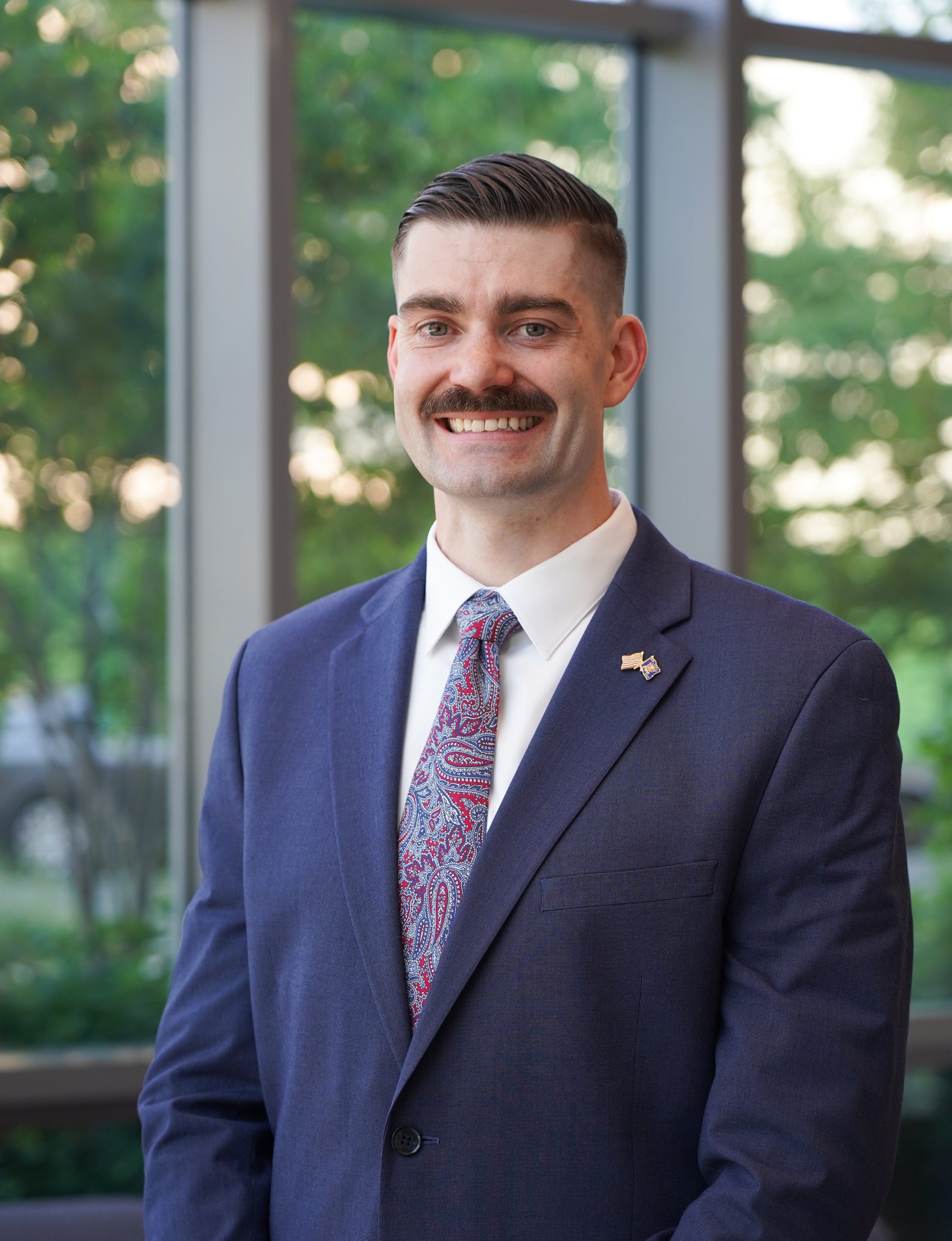
Every U.S. Navy destroyer undergoes a combat systems upgrade, an industrialized process where shipbuilders gut the vessel, replacing old machinery with new equipment. Watching his ship, the USS Chafee, transition from naval operations to an industrial environment after deployment in the Indo-Pacific, Navy Surface Warfare Officer Malachi Seib (MPM’28) gained a perspective he has carried with him.
“Everybody who’s worked in policy understands that resources are finite,” said Seib, a recipient of the Craig Newmark Veterans Scholarship Fund, which increases access to a McCourt School education for active-duty servicemen and women, veterans and military-connected students. “We want to fund everything, and we want to do everything, but we physically can’t. Sometimes the right decision doesn’t always feel like it when you can see and feel the disappointment coming from a sailor over a decision that had to be made.”
This balancing act is part of Seib’s daily life as a Requirements/Action Officer in OPNAV N96, the Pentagon’s surface warfare division, where he aligns resource allocation with Navy requirements. He believes navigating complex defense frameworks requires a human-centric approach and views leadership as an exercise in empathy, ensuring young sailors understand why their micro-level tasks are important to the bigger picture.
Seib is also a competitive athlete who completed his first full Ironman triathlon in 2024. He uses multi-hour bike rides through nature to unplug, clear his thoughts and reset. This capacity to step back and analyze the bigger picture has prepared him well for his next challenge as a Newmark Scholar at McCourt.
He is stepping into McCourt’s Master of Policy Management program to bridge the gap between leading sailors at sea and developing policy in Washington. As he begins his coursework, he is eager to build upon his real-world experiences alongside a diverse cohort before eventually heading back to sea after graduation.
“It’s all about continuous learning, you never stop learning,” he said. “There is a human being behind everything, whether it’s executing the policy or it’s building the policy. As long as you keep that perspective, you’re doing your job.”