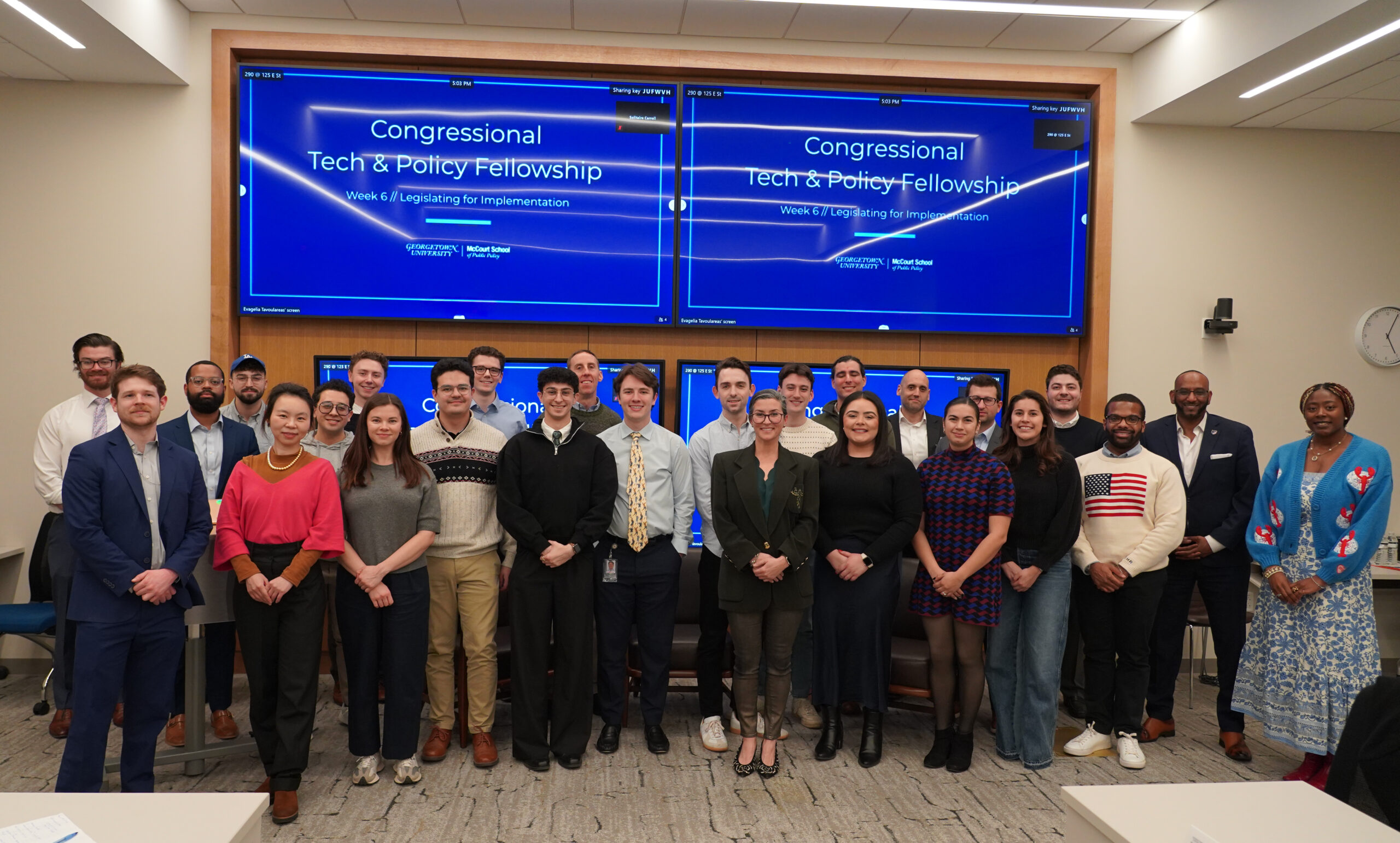
A new Tech & Public Policy Center fellowship helps congressional staffers reframe technology’s role in policymaking.
This story was written by Kinda Ahmed as part of the McCourt School’s annual alumni magazine, Policy Perspectives.
When Emily Tavoulareas was working at the U.S. Digital Service, she kept running into the same problem. Technology teams could fix a broken website or untangle a service at a federal agency, but the real issues were upstream — outdated policies and legislation that were not created with execution in mind.
Based on this observation, Tavoulareas, an adjunct professor at McCourt, designed the Congressional Technology & Policy Fellowship, a six-week program for congressional staffers who want to become more effective at translating legislation into real-world results.
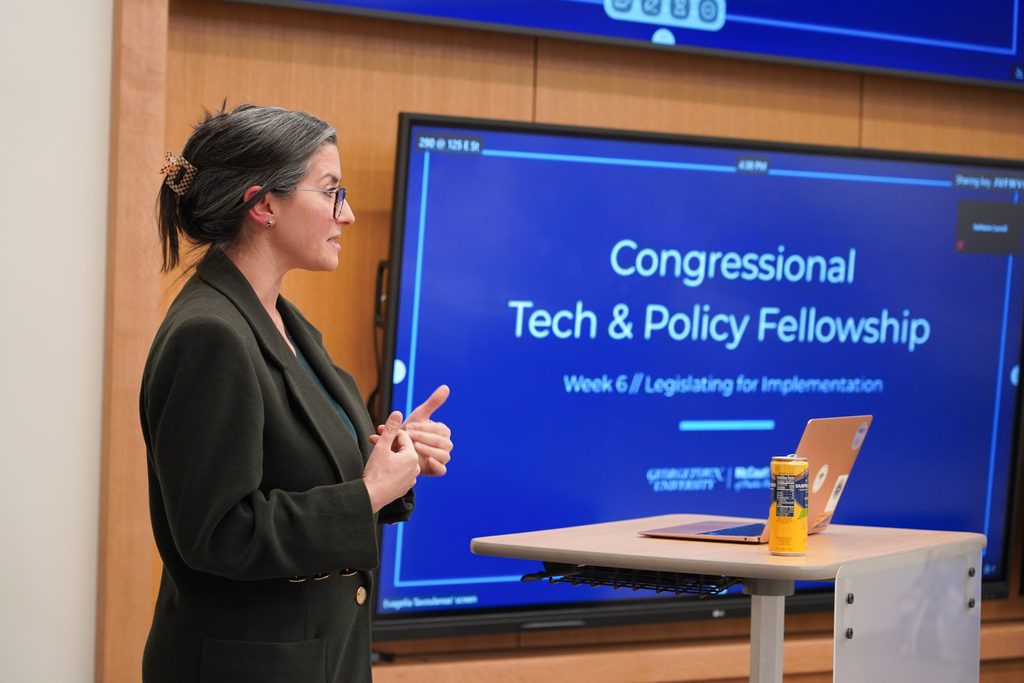
The fellowship, housed within the McCourt School’s Tech & Public Policy Center (TPP) and funded by the Hewlett Foundation and the Packard Foundation, is built on the assumption that policymakers don’t need to be technologists but they do need to understand that technology is, as Tavoulareas explains it, a “dependency” of public policy. It can either accelerate or obstruct the outcomes they are trying to achieve.
“If they consider that technology is a key part of how policy is written and implemented, they are more likely to have the impact that they intend to,” Tavoulareas said. “That’s what the program is about.”
One attendee described one of the most valuable parts of the fellowship: learning how technical architecture shapes policy outcomes. “The program pushed congressional staff to think beyond legislative language and focus on execution, interoperability, adoption and long-term governance challenges,” said William Cano, a national security and technology fellow at the U.S. House Select Committee on the Strategic Competition between the United States and the Chinese Communist Party.
The cohort meets weekly in a seminar-style format. The first session, called “Why Policy Fails,” lays out the problem in plain terms, building on the Niskanen Center’s framework for state capacity. From there, fellows move on to what Tavoulareas calls the “Goldilocks problem” of technology and legislation — the dual risks of under-specifying technology in a bill or over-specifying it so there is not enough flexibility to implement policies successfully. The goal is a middle ground that sets clear constraints while leaving room to figure out what actually works.
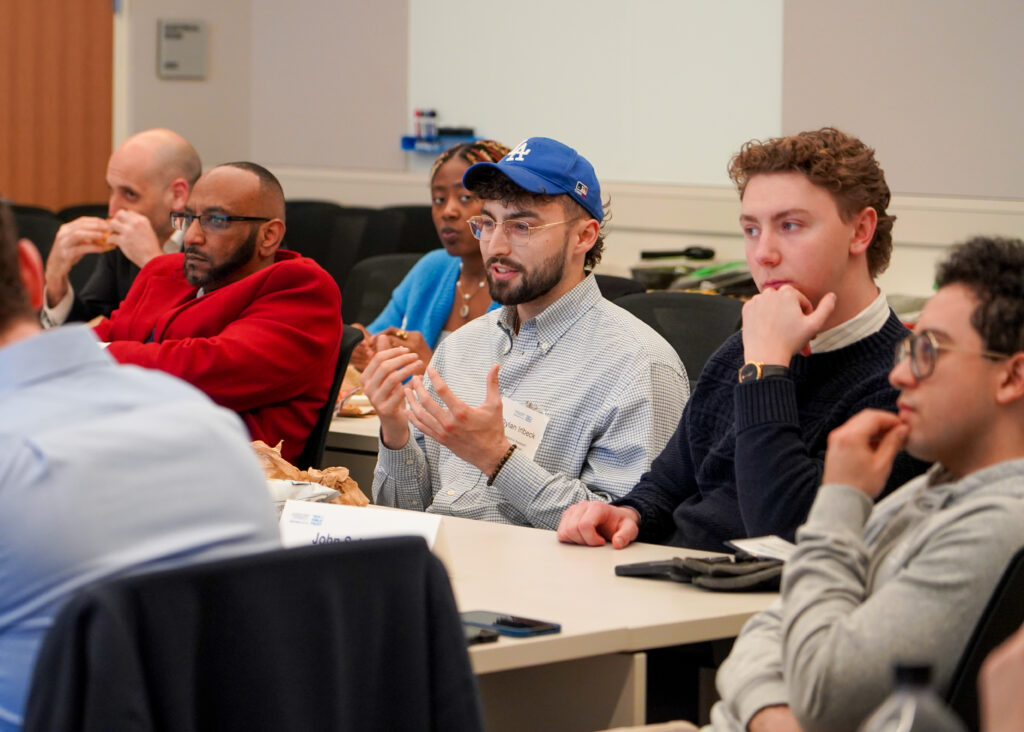
The next two weeks focus on implementation: what happens after a bill becomes law. The participants examine how implementation is approached today at the agency and state levels, drawing on knowledge of experienced practitioners. These sessions have featured Mike Wilkening, former Secretary of California Health & Human Services, who worked on California’s implementation of the Affordable Care Act, and former Acting Director of Veteran Services at the Department of Veterans Affairs, Solitaire Carroll, who spoke about the Department’s rollout of the PACT Act, which expanded health care for veterans.
The program then shifts to analyzing the product operating model, based on Ann Lewis’ and Jennifer Pahlka’s framework published in the Niskanen Center. It’s a blueprint for implementation that is already working in parts of government today, Tavoulareas said.
Next, fellows turn to how artificial intelligence is shaping technology and policy delivery. This session is an open discussion, with technology and policy experts joining the cohort to grapple with how governments around the world are approaching AI and the tensions and questions it raises for policymakers.
The fellowship, which has completed two cohorts with congressional staffers from both parties, closes with an action-oriented workshop that transforms learning into a process for fellows to map out what to stop, start and continue doing operationally in their everyday work.
What Tavoulareas hopes fellows take from the program is a renewed framework for thinking about policy and how best to implement it. “We want legislators to think about what they are trying to achieve, and understand that their goals depend entirely on implementation,” she said.
Reframing that endeavor, she believes, can change how technology shows up in policy — not as an afterthought but as part of a critical dependency from the start. This sentiment reflects TPP’s broader work closing the gap between technological change and institutional readiness by conducting rigorous research and fostering cross-sector collaboration to address the social, political and regulatory challenges posed by emerging technologies.